Cardiorespiratory Fitness
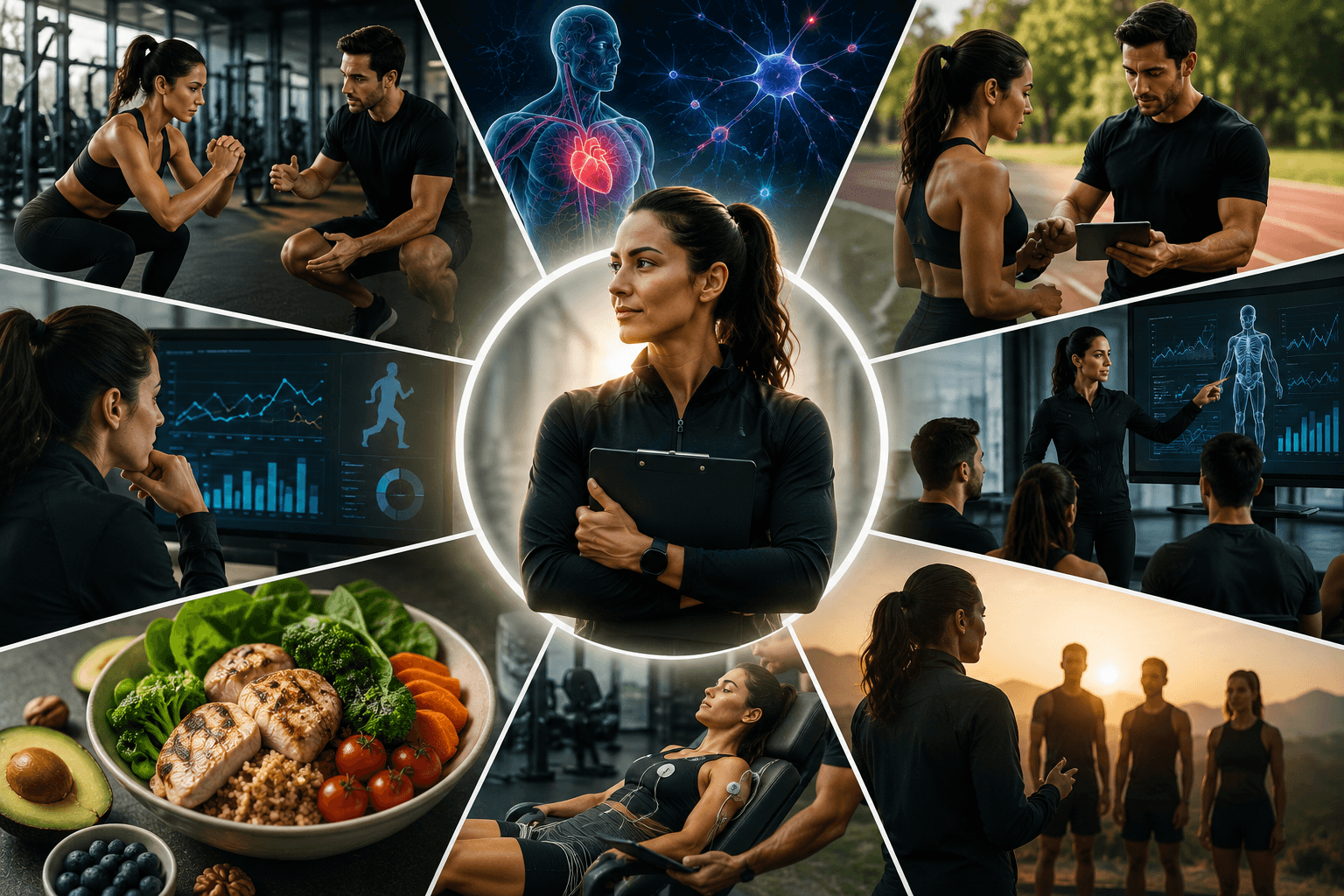

If you want to become a personal trainer or health coach who genuinely changes lives, you need more than enthusiasm. You need the scientific foundation to back it up. Lionel University builds this foundation through exercise physiology coursework that prepares you to design effective programs, assess client needs, and deliver results that last.
Exercise physiology is the study of how your body responds and adapts to physical activity. Understanding these mechanisms separates coaches who guess from coaches who know. The seven skills below show exactly how this knowledge makes you a more capable, confident fitness professional.
Every client walks through your door with a unique body, history, and set of goals. Exercise physiology coursework teaches you how muscles, joints, and energy systems work together during movement. This knowledge allows you to tailor workouts to match each person's specific needs rather than applying cookie-cutter templates.
When you understand concepts like muscle fiber types, cardiovascular adaptations, and metabolic pathways, you can create programs that align with your client's objectives. A marathon runner needs different programming than someone preparing for a powerlifting competition. Exercise science education gives you the tools to serve both effectively.
Before you can help someone reach their goals, you need to know where they are starting. Exercise physiology courses teach you evidence-based assessment methods, including cardiovascular fitness tests, flexibility evaluations, and body composition analysis.
These assessments go beyond simple measurements. You learn to interpret results, identify potential limitations, and establish baseline data to track progress. Lionel University integrates assessment training into its exercise science curriculum so graduates can evaluate clients with confidence from day one.
Understanding anatomy and physiology is essential for keeping your clients safe. When you know how joints move, how muscles function, and how the body responds to stress, you can identify movements that might put someone at risk.
This knowledge becomes especially important when working with special populations, such as older adults, individuals with chronic conditions, or those recovering from injuries. Exercise physiology coursework teaches you to recognize contraindications and modify exercises appropriately. Clients trust trainers who prioritize their well-being, and that trust builds long-term relationships.
Clients are more motivated when they understand why they are doing something. Exercise physiology gives you the vocabulary and knowledge to explain how a specific exercise targets certain muscles, improves cardiovascular efficiency, or supports recovery.
When you can articulate the science behind your programming decisions, clients see you as a credible authority rather than just someone counting reps. This educational approach also helps clients make better choices outside the gym, reinforcing healthy habits in their daily lives.
Helping someone get results in the first few weeks is one thing. Helping them maintain progress for months and years requires strategic planning. Exercise physiology teaches you periodization—the systematic structuring of training over time to prevent plateaus and overtraining.
You learn how to manipulate variables like intensity, volume, and rest to keep the body adapting. Lionel University degree programs cover these advanced programming concepts, preparing graduates to guide clients through sustained improvement rather than short-term gains that fade.
The fitness industry includes trainers with varying levels of education and experience. Exercise physiology coursework sets you apart by demonstrating a commitment to scientific rigor and professional development. Employers, clients, and colleagues recognize the value of formal education in exercise science.
Lionel University holds accreditation from the Distance Education Accrediting Commission (DEAC) and is recognized as a Top 8% Military Friendly® School. Graduates carry credentials that signal expertise and dedication to their craft. In a crowded market, this academic foundation can open doors that might otherwise stay closed.
Exercise physiology coursework prepares you for more than one-on-one training sessions. With this knowledge, you can pursue roles in corporate wellness, clinical exercise settings, sports performance, or fitness management.
Lionel University offers stackable credentials that allow you to progress from a Master Trainer Certificate to associate, bachelor's, and master's degrees in exercise science. Each step expands your career options while deepening your expertise. Graduates work in health clubs, hospitals, athletic programs, and their own independent businesses.
The bridge between classroom learning and real-world application matters. Exercise physiology coursework becomes valuable when you can translate concepts into client outcomes. This means understanding not just what happens in the body but how to use that knowledge during assessments, programming, and coaching conversations.
Lionel University structures its curriculum around practical application. Students complete case studies, externships, and research projects that mirror the challenges they will face as working professionals. Faculty members average 15+ years of industry experience, bringing real-world insight into every lesson.
Not all fitness education programs deliver the same quality. Look for accreditation, faculty credentials, and curriculum alignment with current industry standards. A strong program should balance scientific theory with hands-on skills development.
Consider whether the program offers flexible delivery options that fit your schedule. Lionel University delivers 100% online coursework while maintaining rigorous academic standards. Students can pursue their education while working, caring for family, or fulfilling military service obligations.
Exercise physiology coursework gives you the scientific knowledge to assess clients accurately, design effective programs, keep people safe, and build a reputation as a credible professional. These skills separate trainers who make a lasting impact from those who simply go through the motions.
Lionel University has spent 35 years preparing fitness professionals for successful careers. With 94% student satisfaction rates and 90% of students recommending the university to friends, the program delivers results that speak for themselves. If you are ready to build a career grounded in science and dedicated to helping others, explore the exercise science programs at Lionel University.
Exercise physiology is the study of how the body responds and adapts to physical activity. It covers topics like energy systems, cardiovascular function, muscular adaptations, and metabolic processes during exercise. This knowledge helps personal trainers design effective, safe programs for their clients.
While certification requirements vary, studying exercise physiology significantly improves your effectiveness as a trainer. You gain deeper understanding of how the body works, allowing you to create individualized programs, prevent injuries, and explain the science behind your recommendations.
Exercise science coursework teaches assessment methods, program design principles, and physiological adaptations. Lionel University integrates these concepts with practical application through case studies and externships, so you can apply classroom knowledge to real client situations immediately.
Yes. Lionel University offers 100% online exercise science programs, from certificates to master's degrees. Online delivery allows you to balance education with work, family, and other commitments while gaining the scientific foundation for a successful fitness career.
Exercise physiology education opens doors to personal training, health coaching, corporate wellness, clinical exercise specialist roles, strength and conditioning positions, and fitness management. Lionel University stackable credentials let you build toward advanced roles as your career progresses.