Podcast

Cardiorespiratory fitness is a key indicator of overall health and well-being, playing a vital role in how effectively the body performs during physical activities.
For personal trainers, understanding and accurately assessing cardiorespiratory fitness can make the difference between an average workout plan and a tailored exercise prescription that delivers real results.
This guide delves into the importance of cardiorespiratory fitness, explores the best assessment methods, and provides actionable steps for using this information in program design.
Big Idea Question
How can assessing cardiorespiratory fitness lead to better program outcomes and improved client health?
Lesson Summary
This article provides a comprehensive look at why cardiorespiratory fitness assessments are essential in exercise programming. It outlines key testing methods, from maximal and submaximal tests to practical field tests, and offers strategies for interpreting results. Trainers will learn how to create effective, personalized exercise plans that improve client adherence and long-term outcomes.
Cardiorespiratory fitness refers to the body’s ability to supply oxygen to the muscles during sustained physical activity and is an important indicator of overall health.
Higher levels of cardiorespiratory fitness are associated with better endurance, improved exercise capacity, and reduced risk of several chronic health conditions.
Assessing cardiorespiratory fitness gives trainers a clearer understanding of a client’s baseline aerobic capacity. This information can help guide workout intensity, track progress, and tailor exercise programs toward individual goals.
A baseline gives the trainer a measurable starting point. Without it, it becomes more difficult to determine whether aerobic fitness is improving, remaining stable, or requiring changes in the program.
Assessment can also help identify situations in which additional health screening or medical clearance may be appropriate before progressing to more vigorous exercise.
There are several reliable ways to assess cardiorespiratory fitness, ranging from laboratory-based testing to practical field assessments. Each method has advantages and limitations depending on the client and training environment.
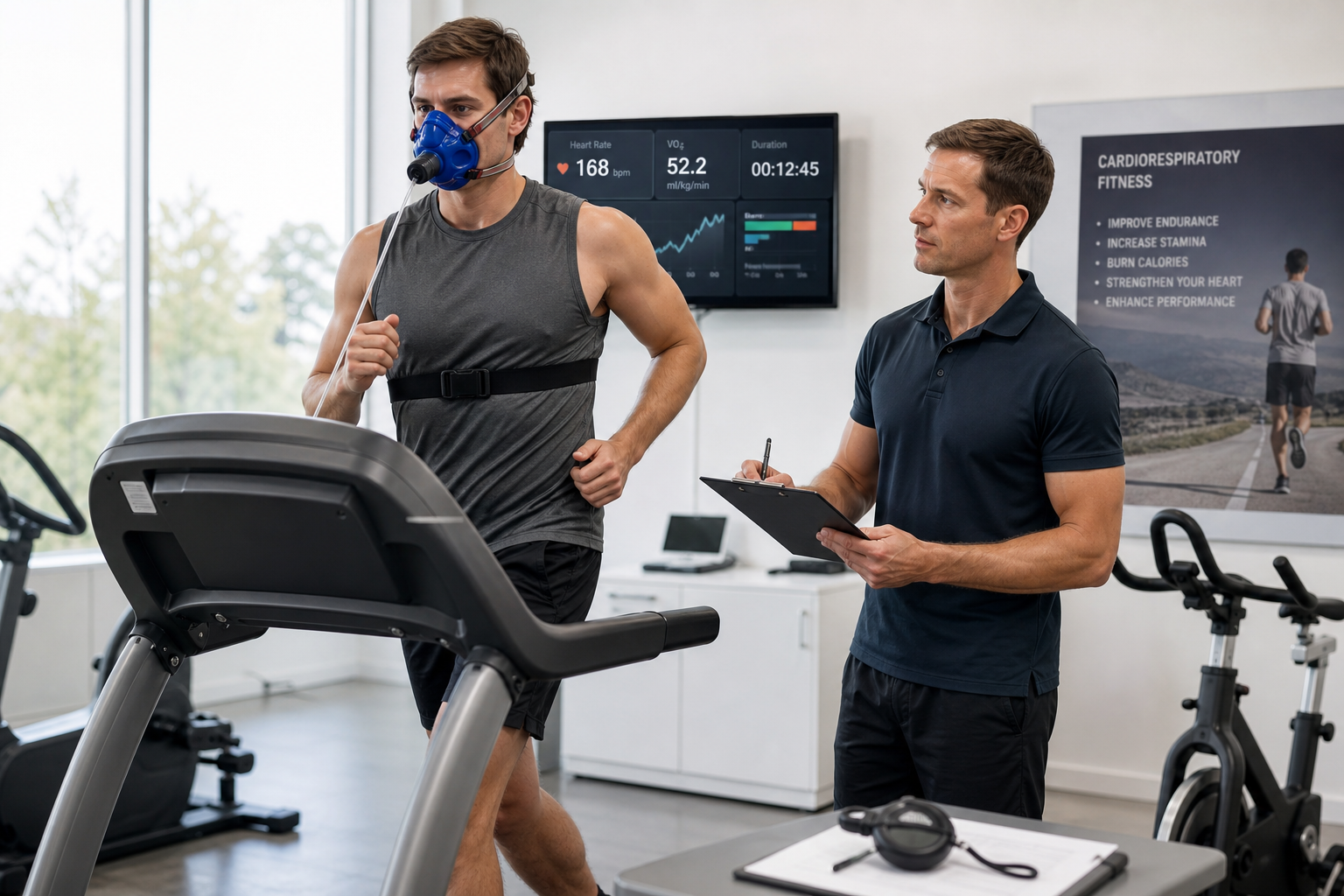
The VO₂ max test is considered the gold standard for measuring cardiorespiratory fitness. It involves monitoring oxygen consumption during a graded exercise test, typically performed on a treadmill or cycle ergometer.
This assessment determines the maximal rate at which the body can consume oxygen during intense exercise, providing a direct measurement of aerobic capacity.
Highly accurate and provides detailed information about aerobic capacity.
Requires specialized equipment, appropriate supervision, and maximal effort, making it unsuitable for some clients or settings.
Submaximal tests estimate aerobic capacity without requiring clients to exercise to maximal effort.
Common examples include the YMCA Step Test and Rockport Walk Test. These assessments often use variables such as heart rate response, workload, time, or recovery to estimate aerobic fitness.
Advantages: Easier to administer and practical for many clients and fitness environments.
Limitations: Less precise than a direct VO₂ max test because results are estimates based on the assumptions of the protocol.
Field tests such as the Cooper 12-Minute Run Test and 1.5-Mile Run Test offer convenient ways to assess cardiorespiratory fitness outside a laboratory.
These assessments use distance, time, or pace to estimate aerobic fitness based on performance.
Advantages: Cost-effective, practical, and accessible in many training environments.
Limitations: Results can be affected by client pacing, motivation, weather, terrain, and testing conditions.
Analyzing cardiorespiratory assessment data is essential for translating test results into useful exercise programming decisions.
Metrics such as VO₂ max, heart rate recovery, and perceived exertion provide different perspectives on the client’s current fitness and exercise response.
VO₂ max values can be compared against appropriate reference data to provide context for a client’s aerobic capacity.
A value that is considered high for one population may represent a different fitness classification in another, which is why factors such as age, sex, training status, and testing protocol should be considered when interpreting results.
Assessment results are most useful when interpreted in context—not as isolated numbers.
Heart rate recovery examines how quickly heart rate declines after exercise ends. Tracking this response under consistent testing conditions can provide additional information about changes in cardiovascular recovery over time.
The Rate of Perceived Exertion (RPE) scale allows clients to communicate how difficult exercise feels. The traditional Borg scale ranges from 6 to 20 and can complement objective measures such as heart rate and workload.
Using the FITT principle—Frequency, Intensity, Time, and Type—trainers can organize aerobic exercise based on assessment results, client goals, current ability, and preferences.
How often aerobic training is performed.
How demanding the exercise session should be.
How long the activity or training session lasts.
The aerobic activity or training mode selected.
For clients with lower cardiorespiratory fitness, starting with moderate activities such as brisk walking or cycling may provide an appropriate foundation. As fitness improves, the program can progressively incorporate longer durations, greater workloads, or interval-based training.
Heart rate zones can be one method for guiding aerobic exercise intensity. Beginners may initially perform more manageable moderate-intensity exercise, while more advanced clients may eventually benefit from higher-intensity training when appropriate.
Regular reassessment helps trainers evaluate whether the program is producing the desired adaptations.
Comparing follow-up results with the client’s baseline can show improvements and provide useful information for adjusting exercise intensity, duration, frequency, or training mode.
Assess the client, build the program, monitor the response, reassess, and use the new information to guide the next stage of training.
One of the biggest challenges in fitness programming is helping clients remain consistent. A well-designed exercise program still depends on the client’s willingness and ability to follow it.
Setting Specific, Measurable, Achievable, Relevant, and Time-bound goals can help clients maintain focus and measure progress.
For example, instead of using a broad goal such as “improve fitness,” a client could establish a target such as walking 10,000 steps per day for the next 30 days.
Clients who feel supported and understood by their trainer may be more likely to remain engaged. Open communication and regular check-ins can help trainers identify challenges and make the program more sustainable.
Introducing different types of aerobic activity can help reduce monotony. Walking, running, cycling, swimming, rowing, and circuit training can provide variety while still developing cardiorespiratory fitness.
Trainers should be aware of common mistakes that can affect the quality and consistency of cardiorespiratory fitness assessments.
A proper warm-up helps prepare the client for the demands of the assessment and creates a more consistent testing experience.
Starting too quickly can lead to premature fatigue and reduce performance during timed or distance-based tests.
Changing protocols or testing conditions can make progress difficult to compare. Consistency improves the usefulness of follow-up assessments.
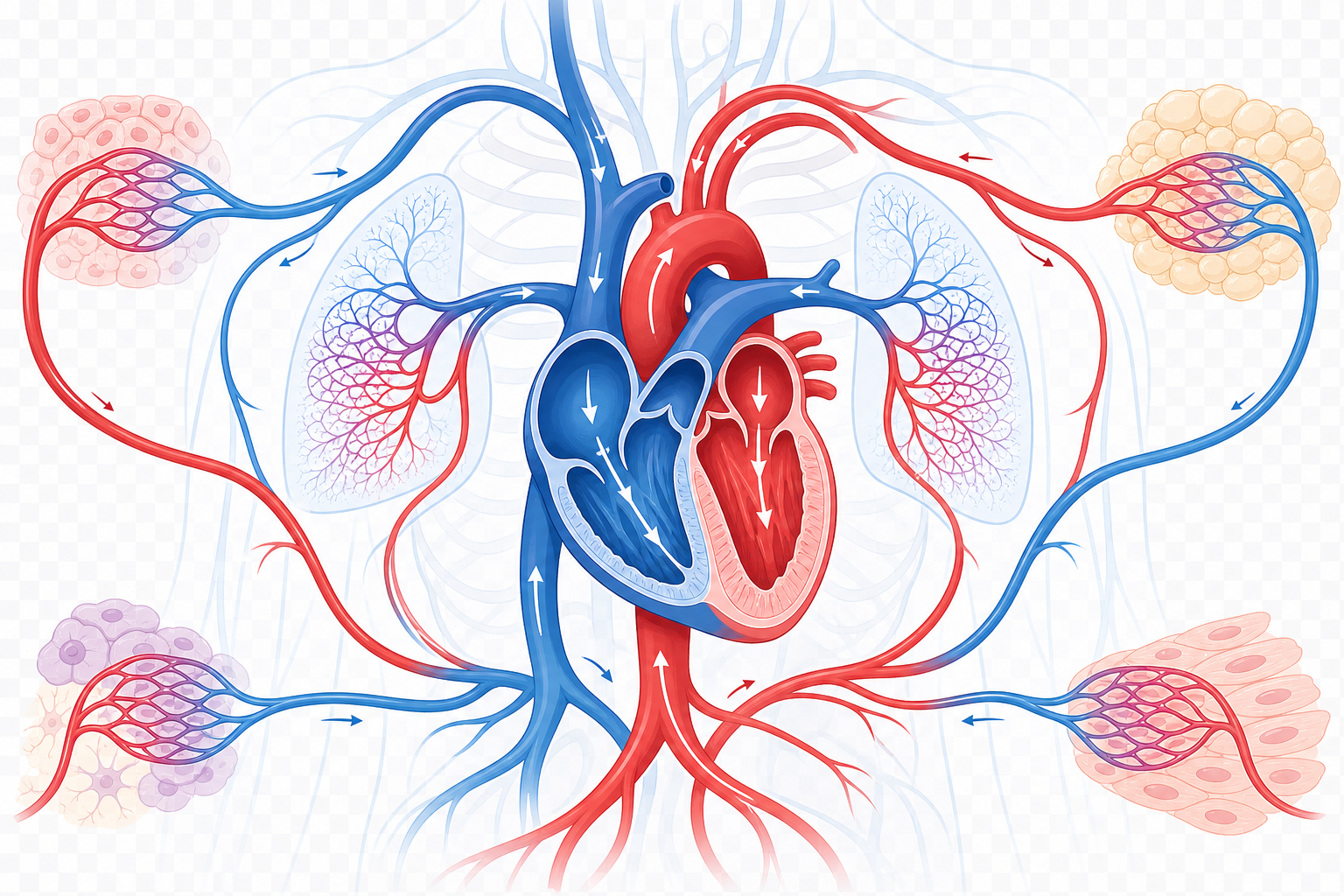
Cardiorespiratory fitness reflects how effectively the cardiovascular and respiratory systems deliver oxygen to working muscles during sustained physical activity.
Assessment helps establish a baseline, guide exercise intensity, monitor progress, and provide objective information that can improve program design.
VO₂ max represents the maximal rate at which the body can use oxygen during intense exercise and is commonly used as a measure of aerobic capacity.
Maximal testing requires exercise at or near maximal effort and may directly measure oxygen consumption. Submaximal testing stops below maximal effort and estimates aerobic capacity using variables such as heart rate, workload, time, or recovery.
Heart rate recovery describes how quickly heart rate declines after exercise. Tracking it under consistent conditions can provide useful information about cardiovascular recovery over time.
Reassessment allows trainers to compare current performance with the original baseline, evaluate program effectiveness, and determine whether exercise variables should be adjusted.
Assessing cardiorespiratory fitness is an important step in creating personalized exercise programs that deliver meaningful results.
By selecting appropriate assessment methods, interpreting the data effectively, and applying it to exercise prescription, trainers can create programs that better reflect the abilities and goals of the individual client.
Regular reassessment, consistent protocols, thoughtful progression, and strong client communication can further improve the usefulness of the process.
The ultimate purpose of cardiorespiratory assessment is not simply to measure fitness—it is to use what you learn to make better decisions for the client.
Understanding how to assess fitness, interpret exercise data, and build individualized programs is an important part of developing as a fitness and exercise science professional.
Explore Lionel University’s certificate and degree pathways to continue building your knowledge of exercise science, fitness assessment, and human performance.