Cardiorespiratory Fitness


Exercise physiology can be a meaningful career.
Exercise physiologists help people improve health, recover from illness, manage chronic disease, and build better fitness. Some work with patients. Others work with athletes, employees, or community health programs.
But if you are thinking about this career, salary matters too.
You may be asking: How much do exercise physiologists make?
The answer depends on several factors. Your pay can change based on your experience, work setting, location, degree level, certification, and specialty.
This guide explains exercise physiologist salary, hourly pay, clinical and corporate roles, location differences, education, certifications, related careers, benefits, negotiation, and future job growth.
Quick Answer
The typical exercise physiologist salary in the United States often falls around the low-to-mid $50,000 range per year.
Entry-level exercise physiology earnings may start closer to $40,000 to $45,000 per year. More experienced professionals, clinical specialists, cardiac rehabilitation professionals, managers, and those in higher-paying regions may earn more.
An exercise physiologist pay rate may also be listed hourly. Many professionals earn around the mid-$20s per hour, although this varies by employer, state, experience, and shift type.
To increase earning potential, focus on experience, clinical skills, advanced certifications, graduate education, specialty areas, and salary negotiation.
Salary note: Salary figures in this guide are general estimates. Actual compensation varies by employer, location, experience, credentials, job duties, and current labor-market conditions.
Salary matters because education is an investment.
Students need to know what kind of income they may earn after graduation. Working professionals also need to understand how to grow their pay over time.
Exercise physiology is a health and fitness career with real impact. Professionals may help patients recover after cardiac events, support people with chronic disease, or help athletes improve performance.
However, pay can vary widely.
A hospital position may pay differently than a role in a fitness center, research lab, or wellness program.
A cardiac rehabilitation specialist may have stronger earning potential than a general fitness specialist.
Clinical credentials, advanced education, and specialized experience may improve career options.
Understanding salary factors helps students plan internships, education, certifications, and job searches more strategically.
An exercise physiologist salary is the yearly pay an exercise physiologist earns for their work. Some jobs pay an annual salary, while others pay by the hour.
Exercise physiologists may work in:
In general, exercise physiology salary tends to grow as professionals gain clinical skills, earn certifications, and move into advanced or leadership roles.
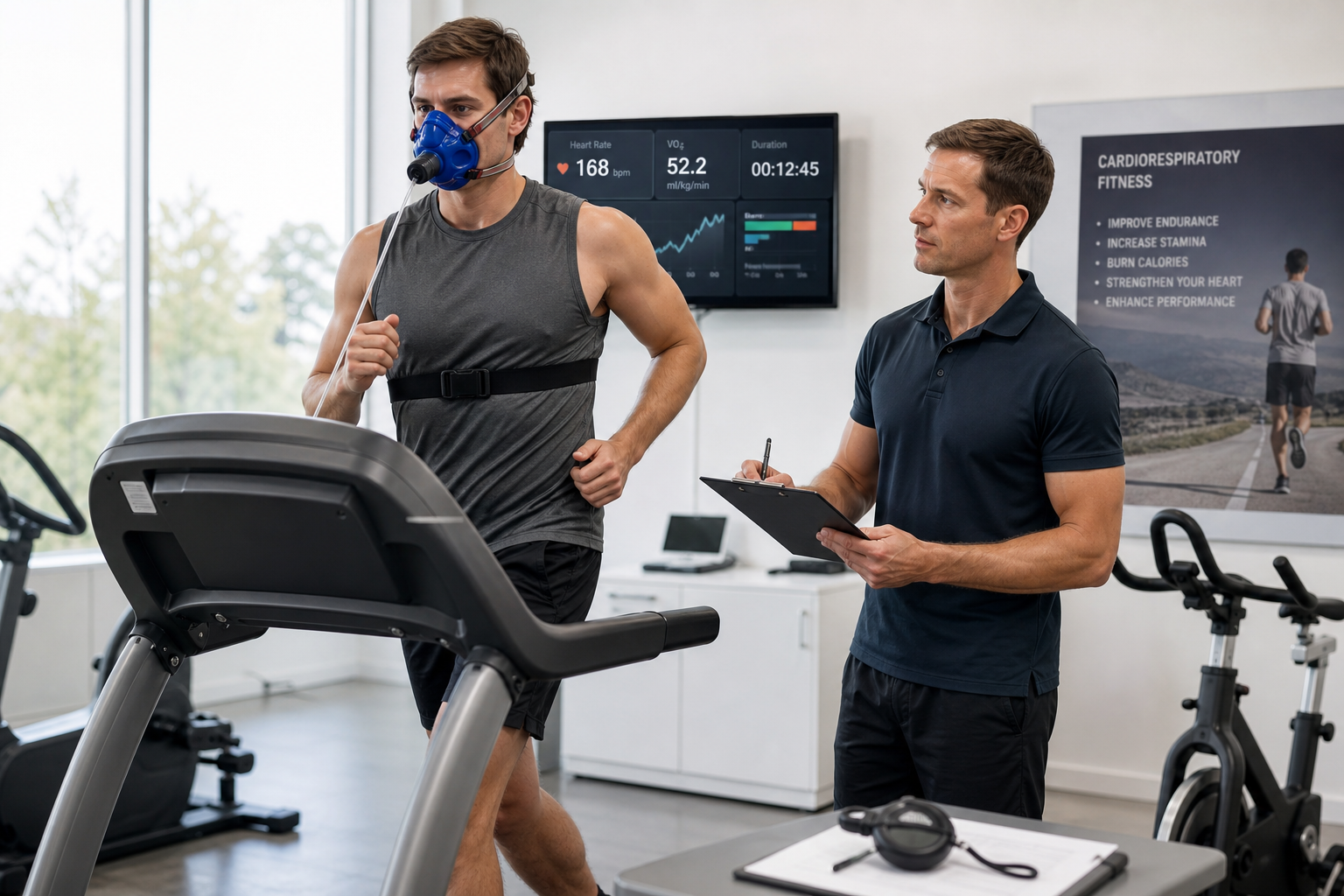
Exercise physiologists study how the body responds and adapts to exercise.
Heart rate, blood pressure, circulation, and oxygen delivery.
How the lungs and muscles exchange and use oxygen during activity.
How the body produces energy and manages blood sugar during exercise.
How training, rest, and progression influence fitness and performance.
This knowledge has value in healthcare, sports, wellness, and research.
Exercise physiologists may work with people who have cardiovascular disease, diabetes, obesity, pulmonary disease, or other health concerns.
They may help athletes improve endurance, strength, recovery, and overall performance.
They may help employees build healthier habits, improve fitness, manage stress, and reduce health risks.
Career principle: The more specialized and responsible the work becomes, the more valuable the professional may become to an employer.
Some employers offer a set yearly salary. This is common in management, research, corporate wellness, and full-time clinical roles.
Example: A wellness program manager may receive a set yearly salary and benefits.
Many hospital and clinical jobs pay hourly. These roles may offer additional pay for overtime, weekends, holidays, or different shifts.
Example: A cardiac rehabilitation employee may earn hourly pay plus additional compensation for weekend coverage.
Some professionals work as contractors in wellness consulting, sports performance, private coaching, or corporate health programs.
Contract roles may pay more per hour but may not include employee benefits.
Salary is only one part of compensation.
A lower salary with strong benefits may be worth more than a higher salary with no benefits.
| Career Stage | Common Responsibilities | Salary Pattern |
|---|---|---|
| Entry Level | Testing support, exercise monitoring, data entry, patient education, and supervised programming. | Often starts near the lower end of the profession’s pay range. |
| Mid Career | Independent testing, complex programming, specialty programs, and internship supervision. | Salary may grow with experience, credentials, and increased responsibility. |
| Senior or Management | Leadership, budgeting, staff oversight, program development, and strategy. | Often offers stronger earning potential because of greater responsibility. |
Entry-level professionals may work in fitness centers, wellness programs, cardiac rehabilitation support, or clinical assistant roles.
Typical early-career duties may include fitness testing, basic exercise programming, patient education, data entry, exercise-session monitoring, and learning clinical procedures.
After gaining experience, exercise physiologists may work with more complex patients, conduct independent testing, design programs, supervise interns, or earn advanced certifications.
Experienced professionals may advance into roles such as cardiac rehabilitation coordinator, clinical exercise physiology lead, wellness program manager, sports performance director, research coordinator, or corporate wellness director.
Clinical exercise physiologist salary is often higher than basic fitness roles because clinical work may involve patients with medical conditions, vital-sign monitoring, ECG or EKG knowledge, medical documentation, exercise testing, safety protocols, and healthcare-team communication.
Cardiac rehabilitation professionals help patients recover after heart attacks, cardiac surgery, or other cardiovascular events. They may monitor heart rate, blood pressure, symptoms, and exercise tolerance.
This type of work requires strong clinical judgment and attention to safety.
Companies may hire exercise physiologists to support employee health and potentially reduce preventable health risks.
Responsibilities may include:
Corporate wellness positions may also offer bonuses, flexible hours, or lifestyle benefits.
Fitness centers and sports performance facilities may use hourly pay, commissions, private-session income, bonuses, or a combination of compensation methods.
Earnings may grow as professionals build a client base or move into management.
Exercise physiologists may help collect data, conduct testing sessions, support research studies, manage laboratories, or teach. Compensation varies by role, education level, grant funding, and institution.
Location can significantly affect exercise physiologist wages.
Higher-paying areas often have large hospital systems, higher living costs, more medical centers, stronger sports-performance markets, and greater demand for clinical care.
States such as California, New York, Massachusetts, and Texas may offer stronger pay in some settings. Actual opportunities vary by city, employer, and specialty.
Do not compare salary alone. A higher salary in a major city may come with higher rent, taxes, transportation costs, and everyday expenses.
A slightly lower salary in a lower-cost region may provide greater purchasing power and a better overall lifestyle.
Urban areas may provide more jobs and higher nominal pay. Rural areas may offer fewer positions but sometimes have stronger demand for qualified healthcare professionals.
Planning tip: Compare salary, housing, transportation, taxes, benefits, and professional growth opportunities before relocating.
A bachelor’s degree in exercise science, kinesiology, exercise physiology, or a related field may qualify graduates for many entry-level fitness, wellness, clinical-support, research-assistant, and exercise physiology roles.
Graduate education may support clinical leadership, research, higher-level hospital positions, teaching, program management, and advanced sports-performance roles.
Certifications may improve job options and earning potential when they align with the desired career path.
Certifications cost money and require time, but they may help professionals qualify for stronger roles, clinical positions, or higher compensation.
Students should choose certifications that match their long-term career goal rather than collecting credentials without a clear plan.
| Career | Typical Education Path | Pay Pattern |
|---|---|---|
| Exercise Physiologist | Bachelor’s or master’s degree | Moderate salary with clinical, fitness, and wellness pathways. |
| Physical Therapist | Doctor of Physical Therapy and licensure | Typically higher pay with more education and licensing requirements. |
| Athletic Trainer | Athletic training education, certification, and applicable licensure | Varies by setting, level, and employer. |
| Personal Trainer | Certification; degree may strengthen preparation | Wide range based on clients, location, commissions, and business model. |
| Wellness Coordinator | Bachelor’s degree commonly preferred | Varies by company, program size, and responsibility. |
| Strength Coach | Degree and certification commonly expected | Varies widely by sport, level, and organization. |
Physical therapists typically earn more, but they also complete more education and must meet professional licensure requirements. Exercise physiologists may enter the workforce sooner and potentially carry less student debt.
Personal trainer pay varies widely. Some trainers earn less in entry-level gym positions, while others earn more through private training, online coaching, or business ownership.
Exercise physiologists may have access to more clinical and healthcare-adjacent career pathways.
Athletic trainer compensation varies by employer and setting. College, hospital, school, and professional sports roles may have different pay structures and responsibilities.
When reviewing a job offer, do not focus only on base pay.
Health, dental, vision, disability, and life insurance may add substantial value.
Retirement contributions, paid time off, holidays, and sick leave affect total compensation.
Employers may fund certification renewals, conferences, workshops, and continuing education.
Some nonprofit healthcare employers may qualify for federal public-service loan forgiveness programs. Eligibility depends on the employer, loan type, repayment plan, and current federal requirements.
Important: Review official government requirements before making employment or repayment decisions based on potential student-loan forgiveness.
Step 1
Clinical skills may make you more valuable to healthcare employers.
Step 2
Clinical roles may value clinical exercise physiology credentials. Sports roles may prioritize strength and conditioning certifications. Wellness positions may value health coaching and behavior-change credentials.
Step 3
Look for internships and professional experience in hospitals, cardiac rehabilitation centers, corporate wellness, sports performance, or research.
Step 4
A master’s degree may be valuable for professionals pursuing leadership, clinical specialization, teaching, research, or advanced performance careers.
Step 5
Before negotiating:
Step 6
If an employer cannot raise base pay, consider asking about:
The outlook for exercise physiology is connected to increasing interest in prevention, chronic-disease management, lifestyle medicine, and safe physical activity.
Potential growth areas include:
As the profession develops, stronger salary opportunities may emerge for professionals with specialized skills, clinical experience, relevant credentials, and leadership ability.
Pay varies by location, setting, experience, education, certification, specialty, and job title.
Benefits, schedule, professional growth, work-life balance, and continuing education also affect the value of a position.
Some employers require certification. Others may not require it but prefer candidates who hold relevant credentials.
Hospitals may offer strong benefits and stability, but corporate wellness, consulting, sports performance, and management may provide higher earning potential in some cases.
Even when base salary is fixed, candidates may be able to discuss benefits, professional development, scheduling, or future review dates.
Many exercise physiologists earn around the low-to-mid $50,000 range per year. Pay may be higher or lower depending on setting, state, experience, certification, and education.
Hourly pay often falls around the mid-$20s per hour, although it varies by employer, shift, location, and experience.
Entry-level exercise physiology earnings may start around $40,000 to $45,000 per year in many roles. Actual starting pay varies significantly.
Clinical exercise physiologist salary may be higher than general fitness roles because clinical work can involve patients, monitoring, testing, safety procedures, and medical documentation.
A master’s degree may improve earning potential and help professionals qualify for leadership, clinical, research, teaching, or advanced performance roles.
ACSM certifications may improve job options and earning potential, particularly for clinical roles. Their value depends on employer requirements and career alignment.
Higher-paying states often include areas with higher living costs and large medical systems. California, New York, Massachusetts, and Texas may offer stronger pay in certain markets.
Physical therapists typically earn more, but they also complete doctoral education and must meet licensure requirements. Exercise physiologists may enter the workforce sooner.
Yes. Professionals may be able to negotiate salary, benefits, continuing education funds, paid time off, scheduling, or compensation-review timelines.
At Lionel University, exercise science education is designed to be practical, clear, and career-focused.
Students learn how the body responds to exercise and how that knowledge can support health, fitness, performance, and recovery.
Career planning should begin before graduation. For example, a student interested in a higher-paying clinical role can begin preparing by seeking clinical internships, practicing patient communication, developing monitoring skills, and identifying certifications that align with the role.
Lionel University helps students build a scientific foundation for exercise science and exercise physiology careers while developing practical knowledge that can support long-term professional growth.
Explore flexible degree and certificate pathways designed for careers in health, fitness, wellness, and human performance.
Explore ProgramsRelated Article
Related Article
Related Article
Exercise physiology can be a rewarding career for people who enjoy health, fitness, science, and helping others.
Salary varies, but there are clear ways to increase earning potential. Professionals can gain experience, choose stronger work settings, earn relevant certifications, build clinical skills, consider graduate education, and learn how to negotiate.
The field may also continue to develop as healthcare places greater emphasis on prevention, chronic-disease management, rehabilitation, and safe exercise.
A career as an exercise physiologist can offer more than a paycheck. It can provide the opportunity to help people live healthier, stronger, and more active lives.
Lionel University helps students prepare for that kind of meaningful work.
View Lionel University degree and certificate programs