Fitness Marketing
Physiology
Expert Guide to Becoming an Exercise Physiologist

Matthew Habecker, CMCO
Expert Guide to Becoming an Exercise Physiologist
19:41
Introduction
You may have heard the phrase “exercise is medicine.” It means movement can support health, recovery, and long-term wellness. However, exercise must be used in the right way.
The right type, amount, intensity, and timing matter. A person recovering from heart surgery does not need the same plan as a healthy athlete. A person with diabetes does not need the same plan as someone training for a marathon.
This is where an exercise physiologist can help.
An exercise physiologist studies how the body responds to physical activity. They use that knowledge to design safe and effective exercise plans for health, recovery, and performance.
In this guide, you will learn what an exercise physiologist does, how this role differs from personal training and physical therapy, how to become one, and what career paths may be available.
Quick Answer
An exercise physiologist is a trained health and fitness professional who studies how the body responds to exercise.
They may work with patients, athletes, clients, or research participants. Their goal is to use exercise to improve health, manage disease, support recovery, or improve performance.
Exercise physiologists often work in hospitals, cardiac rehabilitation centers, sports performance laboratories, wellness programs, research settings, and fitness facilities.
To become an exercise physiologist, students usually need a degree in exercise science, kinesiology, exercise physiology, or a related field. Some roles also require certification, clinical hours, CPR/AED training, and hands-on experience.
On This Page
Why This Matters
Exercise can help people improve health, strength, endurance, and quality of life. However, not every person needs the same exercise plan.
Some people are healthy and want better fitness. Others have heart disease, diabetes, lung conditions, obesity, cancer, joint pain, or a history of surgery. Some athletes need high-level testing and training.
Exercise physiologists help match exercise to the person.
Safer Exercise
Testing and health screening help professionals choose an appropriate starting point.
Better Recovery
Exercise may help patients rebuild endurance, strength, mobility, and confidence after illness or injury.
Disease Management
Structured physical activity can support long-term health and chronic disease management.
Athletic Performance
Testing can help athletes and coaches make better decisions about conditioning, training, and recovery.
This matters because the wrong plan can be unsafe, too difficult, too easy, or not useful. The right plan can help people move better, recover safely, and build confidence.
Exercise physiology also matters because healthcare is focusing more on prevention. More providers understand that physical activity can help manage many long-term health conditions.
What Is an Exercise Physiologist?
An exercise physiologist is a professional who studies how exercise affects the body.
They understand how the body responds during movement and how it changes with training.
They study systems such as:
- Muscles
- Heart
- Lungs
- Blood vessels
- Hormones
- Metabolism
- Nervous system
Exercise physiologists use this knowledge to build exercise plans.
These plans may support:
- Heart health
- Weight management
- Blood sugar control
- Strength
- Endurance
- Recovery
- Mobility
- Athletic performance
- Long-term wellness
Exercise physiologists may work with healthy people, patients, athletes, older adults, or tactical professionals.
The Science Behind Exercise Physiology
Exercise physiology studies what happens inside the body during exercise. It also studies how the body adapts over time.
Acute Responses
An acute response is what happens during one exercise session.
- Heart rate increases.
- Breathing gets faster.
- Muscles use more energy.
- Blood pressure changes.
- Body temperature rises.
- Sweat increases.
These changes help the body meet the demands of exercise.
Chronic Adaptations
A chronic adaptation is a long-term change caused by repeated exercise.
- Better endurance
- Stronger muscles
- Improved blood sugar control
- Better heart efficiency
- Improved movement quality
- Increased exercise tolerance
These changes happen with regular training and enough recovery.
Why This Science Matters
Exercise is powerful, but it should be matched to the person.
An exercise physiologist uses testing, health history, goals, and symptoms to make better decisions.
Example: A person recovering from a heart attack may need supervised exercise with heart rate and blood pressure monitoring. An athlete may need testing to improve speed, power, conditioning, and recovery.
What Does an Exercise Physiologist Do?
An exercise physiologist does more than lead workouts. They assess, test, plan, monitor, educate, and adjust.
Fitness and Health Testing
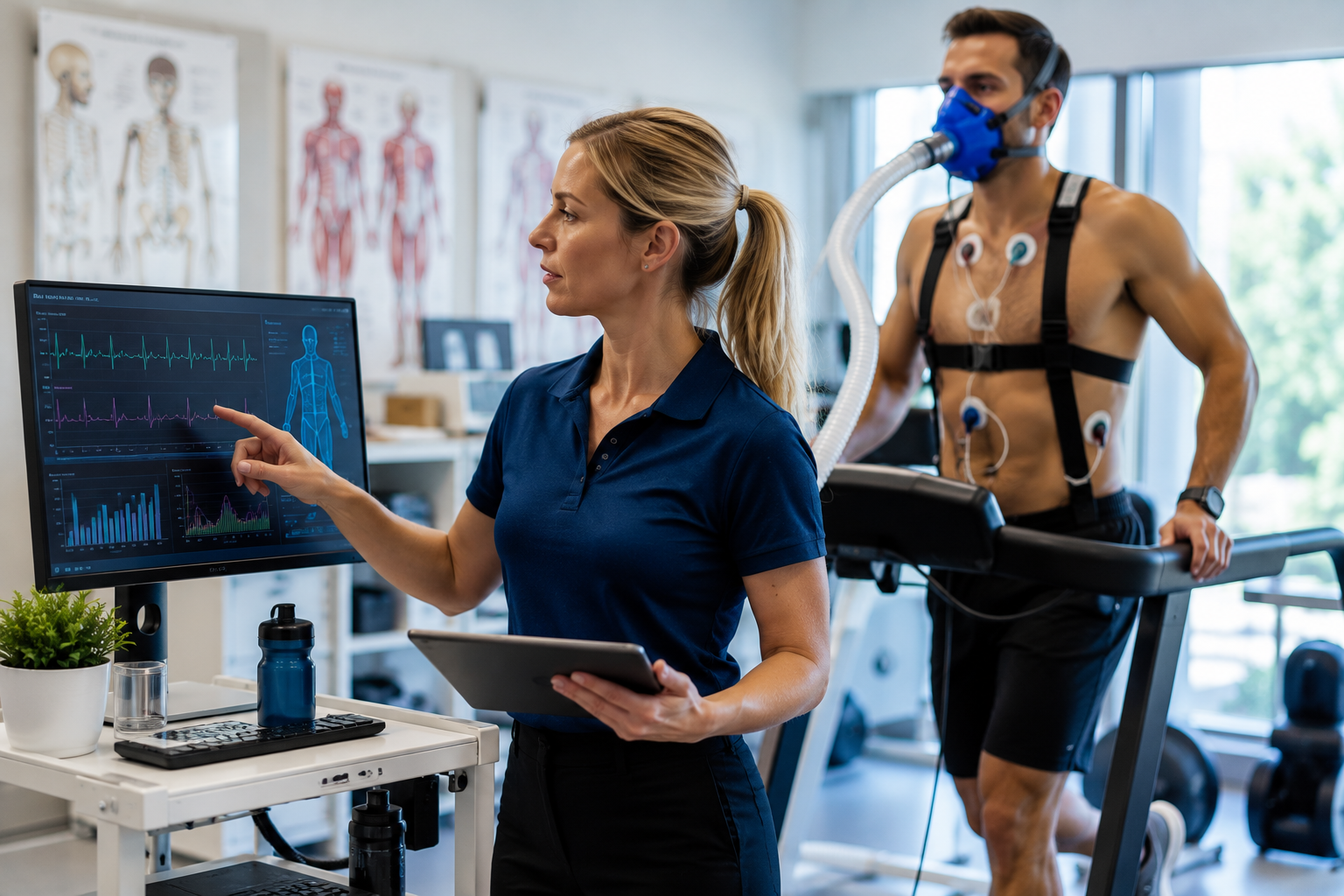
Exercise physiologists may perform or support tests such as:
- Resting heart rate
- Blood pressure
- Body composition
- VO2 max
- Strength testing
- Flexibility testing
- Balance testing
- Movement screening
- Metabolic testing
- ECG or EKG monitoring in clinical settings
These tests help create a safe and useful starting point.
Exercise Prescription
An exercise prescription is a detailed exercise plan.
Type of Exercise
Intensity
Frequency
Duration
Progression
Safety Limits
Recovery Needs
Monitoring Guidelines
This is different from a general workout plan.
Example: A cardiac rehabilitation patient may receive a plan with specific heart rate zones, symptoms to monitor, safety limits, and gradual progressions.
Chronic Disease Support
Exercise physiologists may help people manage chronic conditions such as:
- Heart disease
- Diabetes
- Obesity
- High blood pressure
- Lung disease
- Metabolic syndrome
- Cancer recovery
- Neuromuscular conditions
They use exercise in a safe, structured, and monitored way.
Health Education
Exercise physiologists also teach people about their bodies.
- How exercise affects the heart
- How to recognize warning signs
- How to build safe habits
- How to pace activity
- How to recover
- How lifestyle choices affect health
Good education helps people feel more confident and in control.
Performance Testing
In sports settings, exercise physiologists may test athletes.
- VO2 max
- Lactate threshold
- Power output
- Speed
- Strength
- Recovery
- Movement efficiency
- Body composition
This data helps coaches and athletes improve training.
Exercise Physiologist vs. Personal Trainer
Exercise physiologists and personal trainers both help people exercise, but their roles are different.
| Role | Main Focus |
|---|---|
| Personal Trainer | General fitness coaching for mostly healthy clients. |
| Exercise Physiologist | Exercise testing and programming for health, clinical, or performance goals. |
| Clinical Exercise Physiologist | Supervised exercise for patients and higher-risk populations. |
Personal Trainer
Personal trainers often help clients with fitness goals such as strength, weight management, mobility, or general conditioning. They may work in gyms, studios, or online.
Exercise Physiologist
Exercise physiologists have more training in how the body responds to exercise. They may work with people who have medical conditions or more complex needs.
Clinical Exercise Physiologist
Clinical exercise physiologists often work in healthcare settings. They may monitor vital signs, symptoms, and exercise tolerance.
Some may work in cardiac rehabilitation, pulmonary rehabilitation, or medical fitness programs.
Kinesiology vs. Physical Therapy for Recovery
Kinesiology and physical therapy both relate to movement, but they are not the same.
Physical Therapy
Physical therapists diagnose and treat movement problems. They often work with people after injury, surgery, pain, or illness.
Physical therapists must complete a Doctor of Physical Therapy program and meet licensure requirements.
Kinesiology and Exercise Physiology
Kinesiology is the study of movement. Exercise physiology is the study of how exercise affects the body.
Exercise physiologists may help people continue building strength, endurance, and function after the most acute phase of rehabilitation.
How They Work Together
A physical therapist may help a person regain basic movement after surgery. Later, an exercise physiologist may help the person rebuild overall fitness, strength, and stamina.
Example: A patient may finish physical therapy after knee surgery but still need help returning to hiking, work tasks, or sports. An exercise physiologist can help bridge that gap.
Clinical vs. Sports Exercise Physiology
Exercise physiology has two major pathways: clinical exercise physiology and sports performance.
Clinical Exercise Physiology
Clinical exercise physiologists often work with patients.
They may work in:
- Hospitals
- Cardiac rehabilitation centers
- Pulmonary rehabilitation centers
- Medical fitness centers
- Outpatient clinics
- Wellness programs
They may help people with heart disease, diabetes, obesity, lung disease, cancer recovery, or other health conditions.
Sports and Performance Physiology
Sports exercise physiologists work with athletes and active populations.
They may work in:
- Sports performance centers
- College athletics
- Professional sports
- Research laboratories
- Private training facilities
- Tactical performance settings
They focus on performance, recovery, testing, and injury-risk reduction.
| Area | Clinical Exercise Physiology | Sports Exercise Physiology |
|---|---|---|
| Main Goal | Improve health and manage disease. | Improve performance. |
| Common Setting | Hospital or clinic. | Sports or training facility. |
| Population | Patients or higher-risk clients. | Athletes or active people. |
| Common Tools | ECG/EKG, blood pressure, symptoms, exercise testing. | VO2 max testing, force plates, motion analysis, strength tests. |
Both paths use exercise science. They simply apply it in different ways.
How to Become an Exercise Physiologist
Becoming an exercise physiologist usually takes education, experience, and certification.
Step 1
Earn a Related Degree
Most exercise physiologists study:
- Exercise science
- Kinesiology
- Exercise physiology
- Human performance
- Clinical exercise physiology
- Sports science
A bachelor’s degree may qualify you for some roles. A master’s degree may help with advanced clinical, research, leadership, or specialized positions.
Step 2
Build Hands-On Experience
Experience matters. Students should look for:
- Internships
- Clinical practicums
- Research laboratories
- Cardiac rehabilitation observation
- Fitness testing experience
- Sports performance internships
- Wellness program experience
Hands-on learning helps students apply what they learn in class.
Step 3
Earn CPR/AED Certification
Many roles require CPR/AED certification. This is important because exercise professionals need to be prepared to respond to emergencies.
Step 4
Consider Professional Certification
Some jobs require or prefer professional certification.
- Certified Exercise Physiologist
- Clinical Exercise Physiologist
- Strength and conditioning
- Personal training
- Health coaching
- Cardiac rehabilitation-related credentials
Students should check the current requirements for the role they want.
Step 5
Choose a Specialty
Exercise physiologists may specialize in:
- Cardiac rehabilitation
- Pulmonary rehabilitation
- Sports performance
- Strength and conditioning
- Chronic disease support
- Cancer recovery
- Tactical fitness
- Corporate wellness
- Research
A specialty can help guide internships, coursework, professional development, and certification choices.
Career Outlook and Job Settings
Jobs in exercise physiology can be found in many settings.
Common Work Settings
Hospitals
Cardiac Rehabilitation Centers
Pulmonary Rehabilitation Centers
Fitness Centers
Sports Performance Facilities
Universities
Research Laboratories
Corporate Wellness Programs
Community Health Programs
Military or Tactical Settings
Growing Career Areas
- Preventive healthcare
- Chronic disease management
- Cardiac rehabilitation
- Pulmonary rehabilitation
- Cancer recovery
- Workplace wellness
- Sports performance
- Tactical fitness
- Aging and mobility programs
As more people focus on health, prevention, and movement, exercise physiology can play a larger role.
Working With an Exercise Physiologist
If you are thinking about working with an exercise physiologist, it helps to know what to expect.
The First Visit
During the first visit, the exercise physiologist may ask about:
- Health history
- Current symptoms
- Medications
- Surgeries
- Injuries
- Activity level
- Fitness goals
- Daily habits
They may also complete basic testing.
What to Bring
- A list of medications
- Medical history
- A physician referral, if needed
- Comfortable clothes
- Supportive shoes
- Recent test results
- Questions or concerns
Insurance and Coverage
Some clinical fitness sessions may be covered by insurance. Coverage depends on the diagnosis, referral, setting, and insurance plan.
Cardiac rehabilitation and pulmonary rehabilitation are more likely to be covered when prescribed by a physician.
General fitness, sports performance, and wellness sessions may not be covered. Patients should ask their insurance provider about coverage before starting.
Safety Tips
Be honest about symptoms. Tell the exercise physiologist if you feel:
- Chest pain
- Dizziness
- Shortness of breath
- Joint pain
- Unusual fatigue
- Nausea
- Heart palpitations
This information helps the professional build a safer plan.
Common Mistakes and Misconceptions
Exercise Physiologists Are Just Personal Trainers
Exercise physiologists have deeper training in body systems, testing, clinical exercise, and health conditions. Personal trainers are valuable, but the roles are different.
Exercise Is Always Safe for Everyone
Exercise is helpful for many people, but some individuals need medical guidance or supervised exercise.
Clinical Exercise Is Only for Older Adults
Clinical exercise can help people of many ages. It may support heart health, diabetes care, cancer recovery, pulmonary rehabilitation, and more.
Athletes Do Not Need Exercise Physiologists
Athletes can benefit from testing, recovery planning, energy-system training, and movement analysis.
You Only See an Exercise Physiologist After Something Goes Wrong
Exercise physiologists can also help with prevention, wellness, fitness testing, and performance.
Frequently Asked Questions
What is an exercise physiologist?
An exercise physiologist is a professional who studies how the body responds to exercise and uses that knowledge to improve health, recovery, fitness, or performance.
What does an exercise physiologist do?
They may assess fitness, perform exercise testing, design exercise plans, monitor health markers, educate patients or clients, support chronic disease management, and help athletes improve performance.
How do you become an exercise physiologist?
You usually need a degree in exercise science, kinesiology, exercise physiology, or a related field. Some jobs also require certification, clinical hours, hands-on experience, and CPR/AED training.
What is the difference between an exercise physiologist and a personal trainer?
A personal trainer generally focuses on fitness coaching. An exercise physiologist has deeper training in exercise testing, body systems, clinical conditions, and performance science.
What is clinical exercise physiology?
Clinical exercise physiology uses supervised exercise to support people with medical conditions such as heart disease, diabetes, obesity, cancer, or lung disease.
Do exercise physiologists work with athletes?
Yes. Sports exercise physiologists may test athletes, study movement, improve conditioning, analyze performance data, and support recovery.
Are clinical fitness sessions covered by insurance?
Sometimes. Coverage depends on the insurance plan, diagnosis, referral, and setting. Cardiac or pulmonary rehabilitation may be more likely to receive coverage when prescribed by a physician.
Is exercise physiology a good career?
Exercise physiology can be a good career for people interested in health, fitness, science, patient care, sports performance, or preventive wellness.
Key Takeaways
- Exercise physiologists use movement to support health, recovery, fitness, and performance.
- They study how the heart, lungs, muscles, hormones, metabolism, and nervous system respond to exercise.
- Their work may include testing, exercise prescription, monitoring, education, and program design.
- Clinical exercise physiologists often work with patients and higher-risk populations.
- Sports exercise physiologists often work with athletes and active populations.
- This career usually requires a related degree, hands-on experience, and sometimes professional certification.
- Exercise physiologists can work in hospitals, rehabilitation centers, sports facilities, wellness programs, universities, and research laboratories.
How Lionel University Prepares Students
At Lionel University, exercise science education is built to be clear, useful, and career-focused.
Students learn how the body responds to exercise. They also learn how to apply that knowledge in fitness, health, performance, wellness, and recovery settings.
As an exercise science educator, I often remind students that exercise prescription is not guesswork. It is a careful process.
For example, a patient in cardiac rehabilitation needs more than encouragement to “work harder.” That patient needs monitoring, safe progressions, and a plan that fits their medical history.
An athlete, on the other hand, may need performance testing, training zones, workload management, and recovery tracking.
Lionel University helps students build the scientific foundation and practical thinking needed for these kinds of roles.
Using Movement With Purpose
The goal is to help students understand the body and use movement to help people live healthier, stronger, and more active lives.
Top 3 Related Articles to Read Next
Related Article
What Is Exercise Physiology?
Related Article
Exercise Physiology Degree: A Path to Health Careers
Related Article
What Careers Can You Get With an Exercise Science Degree?
Conclusion
Exercise physiologists are movement science professionals.
They use exercise to help people improve health, recover safely, manage disease, and perform better.
Their work can happen in hospitals, clinics, gyms, sports facilities, research laboratories, universities, and wellness programs.
They are not simply counting repetitions. They are using science to create safe, individualized, and useful exercise plans.
Whether helping a patient rebuild heart health or helping an athlete improve performance, exercise physiologists show how powerful movement can be when it is used with care.
Lionel University helps students build the knowledge and skills needed to enter this growing field.
Where to Go Next
View Lionel University Degree and Certificate Programs