
Coaching
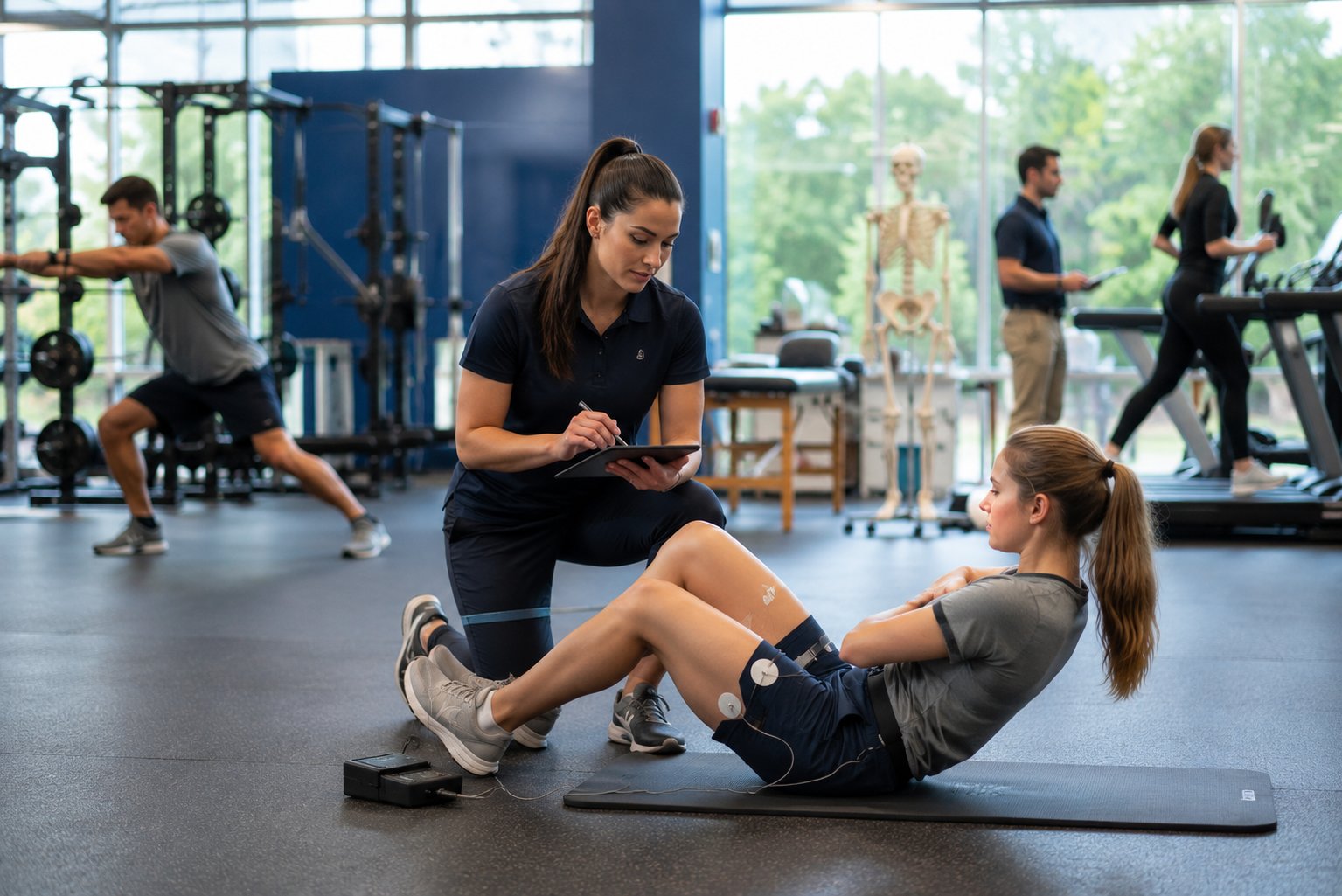

Kinesiology is the study of human movement. It examines how the body moves, performs, heals, and adapts.
If you enjoy fitness, health, sports, or helping people move better, kinesiology may provide a strong career foundation. It can lead to opportunities in fitness, healthcare, sports performance, wellness, rehabilitation, research, and workplace health.
Many students ask the same question: What can you do with a kinesiology degree?
Years ago, many people associated kinesiology primarily with physical education. Today, the field is much broader. Kinesiology professionals can work in gyms, clinics, hospitals, schools, sports programs, corporate wellness departments, community programs, and research laboratories.
This guide explores the main career paths available to kinesiology majors, including entry-level positions, clinical careers, specialized roles, advanced degrees, and future employment trends.
Quick Answer
A kinesiology degree can prepare students for careers in fitness, wellness, sports, rehabilitation, healthcare support, workplace health, and human performance.
Common kinesiology careers include personal trainer, strength and conditioning coach, wellness coordinator, rehabilitation specialist, exercise physiologist, athletic training aide, fitness technology specialist, and ergonomic consultant.
Some roles may require a bachelor’s degree and professional certification. Others require graduate education, supervised clinical hours, licensure, or board examinations. Physical therapy, occupational therapy, athletic training, physician assistant studies, and sports medicine are examples of pathways requiring additional education.
Kinesiology matters because movement influences nearly every part of daily life.
People rely on movement to work, play, exercise, recover, and remain independent. When movement is limited by pain, injury, illness, poor conditioning, or aging, quality of life can suffer.
Kinesiology professionals may help athletes improve strength, speed, movement quality, recovery, and sport-specific performance.
Professionals may support individuals rebuilding strength, mobility, confidence, and function after injury or illness.
Ergonomic and wellness professionals help workers reduce discomfort, improve posture, and build healthier routines.
Kinesiology graduates can support active aging, chronic disease prevention, health promotion, and long-term well-being.
Kinesiology can also serve as a stepping stone toward graduate programs in physical therapy, occupational therapy, athletic training, sports medicine, physician assistant studies, clinical exercise physiology, and human performance.
Kinesiology is the scientific study of human movement. It examines how the body moves, why people move differently, and how movement affects health, performance, recovery, and daily life.
The field may include anatomy, physiology, biomechanics, motor control, psychology, behavior change, health promotion, and exercise science.
Kinesiology asks questions such as:
Because movement is important in many settings, kinesiology connects to sports, fitness, healthcare, wellness, education, rehabilitation, research, public health, and workplace safety.
Students frequently compare kinesiology and exercise science careers. The fields are closely related, but they are not always identical.
| Field | Primary Focus | Common Applications |
|---|---|---|
| Kinesiology | The broad study of human movement | Exercise, sport, posture, daily movement, motor learning, rehabilitation, and behavior |
| Exercise Science | How the body responds and adapts to exercise | Fitness testing, training, health, conditioning, and performance |
Both degrees can lead to careers in fitness, wellness, sports, human performance, and healthcare support.
The best choice depends on your professional goals. Kinesiology may be a good fit if you want a broader understanding of movement. Exercise science may be a strong option if you want to focus more directly on exercise testing, training, fitness, physiology, and performance.
Kinesiology careers are based on movement science. Professionals use knowledge from several scientific disciplines to help people move more safely and effectively.
Anatomy is the study of body structures, including muscles, bones, joints, tendons, and ligaments.
Example: A rehabilitation specialist may need to understand the structure and function of the shoulder before helping someone return to lifting, reaching, or throwing.
Physiology is the study of how the body functions. In kinesiology, this may include the heart, lungs, muscles, nervous system, hormones, and energy systems.
Example: A cardiac rehabilitation professional must understand how the cardiovascular system responds to exercise following a cardiac event or procedure.
Biomechanics is the study of movement and force. It helps explain how the body produces motion, absorbs impact, and responds to physical stress.
Example: A strength coach may analyze an athlete’s squat, sprint, or jump to improve performance and reduce unnecessary stress.
Motor control examines how the brain, nervous system, and body coordinate movement. It can help explain balance, coordination, reaction time, skill development, and movement relearning.
Example: A rehabilitation professional may help an individual relearn movement skills following a neurological injury.
Kinesiology also includes the psychological side of movement. This may include motivation, confidence, stress, goal setting, communication, and behavior change.
Example: A workplace wellness coordinator may help employees develop sustainable habits such as walking more, managing stress, and taking movement breaks.
Choosing a kinesiology career becomes easier when you follow a clear planning process.
Step 1
Consider where you would like to work. Options may include gyms, clinics, hospitals, schools, sports teams, research laboratories, corporate offices, and community health programs.
Example: If you enjoy sports, strength and conditioning may be a good fit. If you prefer healthcare, rehabilitation or clinical exercise physiology may be more appropriate.
Step 2
You may be interested in working with athletes, older adults, children, patients, workers, military members, general fitness clients, or individuals recovering from injury.
Example: If you enjoy helping people recover and regain function, a rehabilitation-focused career may be a strong fit.
Step 3
Some roles require a bachelor’s degree and certification. Others require a master’s degree, doctorate, supervised experience, clinical hours, licensure, or a board examination.
Example: A personal trainer may need an industry credential, while a physical therapist must complete a Doctor of Physical Therapy program and meet state licensure requirements.
Step 4
Students can build experience through internships, volunteer work, coaching, research labs, fitness jobs, clinical observation, and campus wellness programs.
Example: A student interested in cardiac rehabilitation may pursue a hospital internship or complete clinical observation hours.
Step 5
Kinesiology continues to evolve as new research, technology, methods, and safety guidelines emerge. Long-term professional development is essential.
A graduate degree is not required for every kinesiology role. Several entry-level positions can help bachelor’s graduates gain experience, build professional connections, and strengthen their resumes.
Personal trainers create exercise plans, teach proper technique, monitor progress, and support clients as they build healthier habits.
Fitness coaches may lead workouts, teach exercise skills, motivate participants, and help individuals remain consistent.
These professionals support athletic development through strength training, speed work, agility, conditioning, mobility, and recovery.
Aides may support athletic training environments while gaining experience with injury prevention, clinic operations, and rehabilitation support.
Wellness coordinators organize health education, fitness challenges, wellness events, stress management programs, and employee engagement initiatives.
Community professionals may develop activity programs for children, older adults, families, and local residents.
Clinical and rehabilitation careers focus on health, recovery, function, and quality of life. These positions may involve people recovering from injury, surgery, illness, or chronic health conditions.
Cardiac rehabilitation professionals help individuals recover following cardiovascular events, procedures, or diagnoses.
Responsibilities may include:
Clinical exercise physiologists use exercise testing and supervised training to support health, function, and recovery.
Some roles require professional certification, supervised clinical experience, and an examination. This career may be a strong fit for individuals interested in both exercise science and patient care.
Rehabilitation specialists help individuals rebuild strength, movement, endurance, and confidence.
Important skills may include:
Physical therapy aides support physical therapists and patients by preparing equipment, maintaining treatment areas, assisting with clinic flow, and helping with approved activities under supervision.
This can be a helpful entry-level position for students who plan to apply to physical therapy school.
Scope reminder: Clinical, therapeutic, and rehabilitation job duties depend on education, certification, supervision, and state licensure requirements.
Some kinesiology careers are highly specialized. These positions may offer stronger earning potential when combined with advanced education, professional certification, experience, technology skills, or leadership responsibility.
Ergonomic consultants assess workstations, lifting tasks, posture, repeated movements, and workplace habits to reduce discomfort and injury risk.
Sports performance specialists help athletes improve strength, speed, power, agility, conditioning, and recovery.
Research assistants may support studies involving movement, injury, prosthetics, muscle function, neurological conditions, and responses to exercise.
Kinesiology graduates may work with wearable devices, performance platforms, recovery applications, fitness software, and health technology products.
A bachelor’s degree in kinesiology can provide a strong foundation for graduate study in allied health, medicine, research, education, and human performance.
| Advanced Path | Primary Focus | Typical Additional Requirement |
|---|---|---|
| Physical Therapy | Movement, pain reduction, rehabilitation, and function | Doctor of Physical Therapy and licensure |
| Occupational Therapy | Daily function, independence, and meaningful activity | Graduate education and licensure |
| Sports Medicine | Medical care for athletes and active populations | Medical school, residency, and applicable specialization |
| Athletic Training | Injury prevention, emergency care, evaluation, and rehabilitation | Accredited professional education, certification, and licensure |
| Physician Assistant Studies | Medical evaluation, diagnosis, and treatment planning | Physician assistant graduate program and certification |
| Graduate Kinesiology or Exercise Science | Research, teaching, performance, leadership, or clinical exercise | Master’s or doctoral education |
The kinesiology job market is influenced by growing interest in fitness, active aging, injury prevention, health promotion, workplace wellness, rehabilitation, and human performance.
Healthcare systems are also placing greater emphasis on prevention and long-term wellness. Sports organizations continue using movement science and technology to improve performance and recovery, while employers are investing in employee well-being and ergonomic support.
Areas with potential include:
Individual career opportunities depend on education, professional credentials, experience, specialty, employer requirements, and geographic location.
Teaching is one possible path, but kinesiology can also lead to opportunities in fitness, healthcare, sports, wellness, research, rehabilitation, and workplace health.
Many clinical careers require additional certification, supervised hours, graduate education, or state licensure.
The fields overlap, but kinesiology is usually broader, while exercise science commonly focuses more directly on exercise, training, fitness, and performance.
Wellness, rehabilitation, ergonomics, active aging, healthcare support, and fitness technology can also provide meaningful careers.
Many students change direction after completing courses, internships, research, volunteer work, or professional shadowing.
A kinesiology degree can support careers in fitness, wellness, sports performance, rehabilitation support, corporate wellness, ergonomics, research, health technology, and healthcare-related settings. Some careers require additional education or certification.
Possible entry-level positions include personal trainer, fitness coach, wellness coordinator, rehabilitation aide, physical therapy aide, athletic training aide, community health specialist, and strength and conditioning assistant.
Kinesiology can be a good major for students interested in human movement, health, fitness, sports, rehabilitation, and performance. It can also provide preparation for graduate healthcare and human performance programs.
Higher-paying pathways often require advanced education, licensure, leadership responsibility, or specialized experience. Examples may include physical therapist, occupational therapist, sports medicine physician, ergonomic consultant, clinical exercise physiologist, or sports performance director.
Kinesiology is the broader study of human movement. Exercise science commonly focuses more specifically on exercise, training, health, fitness testing, and performance.
Not always. Some positions require a bachelor’s degree and certification. Clinical, academic, research, and specialized leadership roles may require graduate education.
Yes. Kinesiology is a common undergraduate foundation for students planning to apply to physical therapy programs. Applicants must complete all prerequisite courses required by the Doctor of Physical Therapy programs they select.
Yes. Kinesiology can provide a useful scientific foundation. However, becoming a sports medicine physician requires medical school, residency, and appropriate specialty training.
At Lionel University, exercise science education is built around clear learning and practical application.
Students learn how the body moves and how movement connects to health, fitness, performance, recovery, and quality of life.
Movement science becomes most valuable when students can apply it to real situations. It is not enough to memorize the names of muscles. Students should understand how those muscles help a person walk, lift, run, recover, work, or return to daily activity.
Biomechanics can be connected to questions such as why a worker experiences shoulder discomfort at a desk, why an athlete loses power during a jump, or how an older adult can improve balance and confidence.
Lionel University helps students build a strong foundation in exercise and movement science while exploring fitness, coaching, wellness, health, human performance, and career preparation.
The goal is to help students understand the body and apply that knowledge to help people live, move, recover, and perform better.
Related Article
Related Article
Related Article
Kinesiology is a flexible degree with many possible career paths.
It can lead to opportunities in fitness, wellness, sports performance, rehabilitation, healthcare support, workplace health, technology, and research. It can also prepare students for graduate programs in physical therapy, occupational therapy, athletic training, sports medicine, physician assistant studies, and human performance.
The best path depends on your goals. Some students want to coach athletes. Others want to help people recover, improve employee health, support active aging, or study human movement in a laboratory.
No matter which direction you choose, kinesiology provides a strong foundation in how the body moves and why movement matters.
Lionel University helps students build that foundation and prepare for careers that support health, performance, recovery, and quality of life.
Explore Lionel University degree and certificate programs