Cardiorespiratory Fitness
.png?width=1536&height=1024&name=Teaching%20fitness%20and%20anatomy%20in%20action%20(1).png)

Every training session you lead involves decisions that affect your client's safety and results. Understanding how the body responds to physical stress, recovers between workouts, and adapts over time is what separates a good trainer from one who delivers exceptional outcomes. Exercise physiology coursework gives you that scientific foundation.
At Lionel University, aspiring and early-career fitness professionals learn how to apply exercise science principles to real-world training scenarios. This article explores why exercise physiology education matters and how it directly improves program design and client safety.
Exercise physiology is the study of how your body's systems respond and adapt to physical activity. It examines the acute (immediate) and chronic (long-term) effects of exercise on the cardiovascular, respiratory, muscular, and metabolic systems.
For fitness professionals, this knowledge is foundational. When you understand how oxygen is delivered to working muscles, how energy is produced during different types of activity, and how fatigue develops, you can design programs that align with your client's goals.
This education also helps you explain the "why" behind your programming decisions. Clients who understand the reasoning behind their workouts are more likely to stay committed and trust your guidance.
Client safety is a primary responsibility for every fitness professional. Exercise physiology coursework prepares you to identify risk factors, recognize abnormal responses to exercise, and modify programming for special populations.
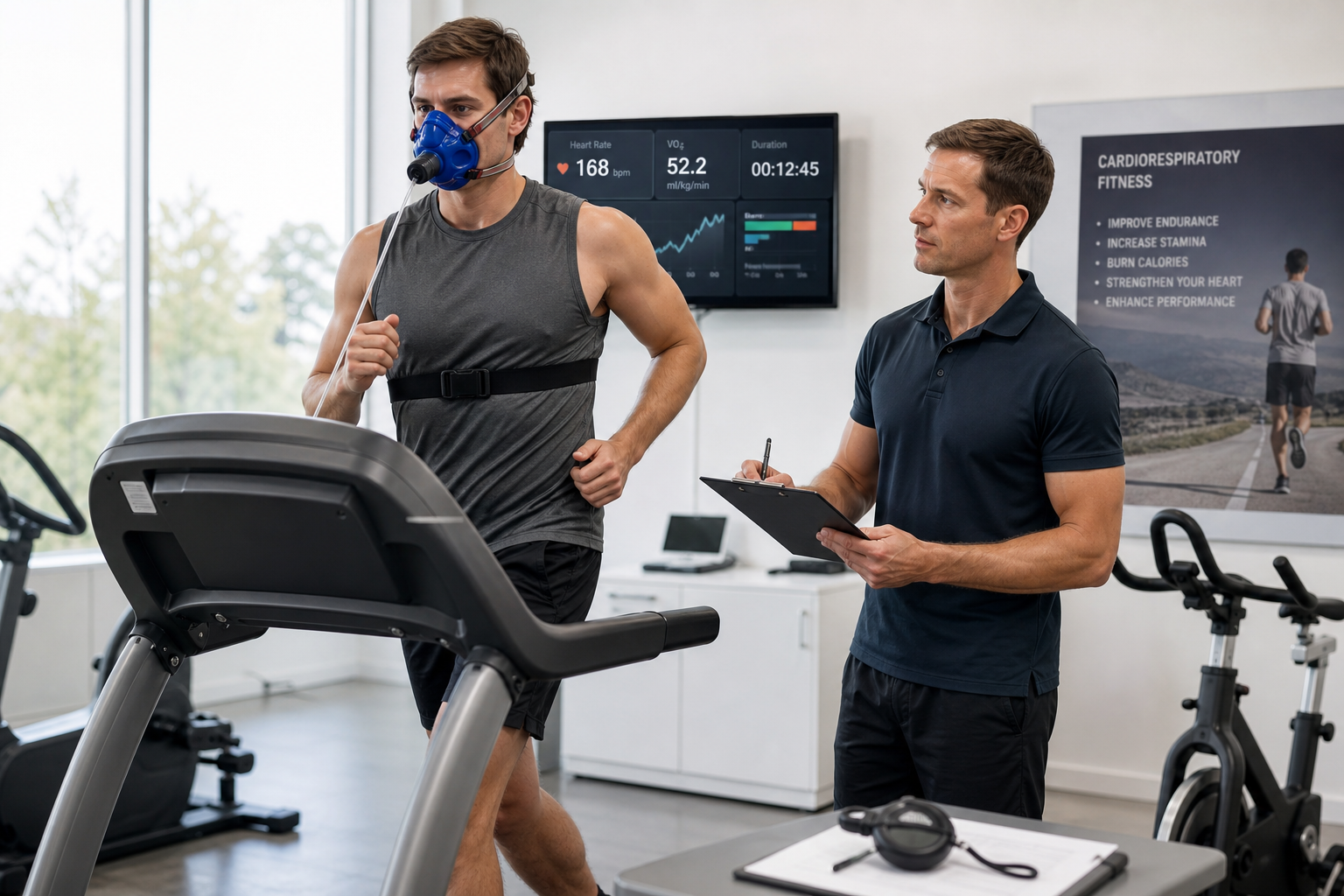
You learn to monitor heart rate responses, blood pressure considerations, and signs of overexertion. This knowledge becomes critical when working with clients who have chronic conditions, are recovering from injuries, or are new to exercise.
The Bureau of Labor Statistics notes that exercise physiologists focus on developing safe treatment plans that help patients recover from chronic conditions and improve cardiovascular function, muscular strength, and flexibility.
Effective program design requires more than knowing which exercises target specific muscle groups. You need to understand how energy systems interact, how training variables affect adaptation, and how individual factors influence recovery.
Exercise physiology coursework teaches you about the ATP-PC, glycolytic, and oxidative energy systems. When you know how these systems fuel different types of activity, you can structure workouts that match your client's sport, fitness level, or training goals.
You also learn about principles like progressive overload, specificity, and periodization. These concepts become practical tools for creating programs that produce measurable results over time.
One of the most valuable aspects of exercise physiology education is learning to adapt your approach for different populations. Seniors, youth athletes, pregnant clients, and individuals with chronic conditions all require modified programming strategies.
Lionel University's exercise science programs emphasize population-specific considerations, preparing you to work with diverse clients safely. You learn how aging affects muscle mass and bone density, how youth athletes differ physiologically from adults, and how common health conditions impact exercise tolerance.
This specialized knowledge expands your career opportunities and allows you to serve clients that many trainers are not qualified to work with.
Anatomy and physiology work together in practical training applications. When you understand muscle origins, insertions, and joint actions, you can select exercises that target specific areas while minimizing injury risk.
Exercise physiology coursework builds on anatomical knowledge by explaining how muscles contract, how connective tissue responds to load, and how the nervous system coordinates movement. This deeper understanding helps you troubleshoot technique issues and identify potential causes of discomfort or pain.
Personal trainers who understand both anatomy and physiology can communicate more effectively with healthcare professionals when clients require collaborative care.
Formal exercise physiology education opens doors that certification alone may not. Employers in clinical settings, corporate wellness programs, and collegiate athletics often prefer candidates with accredited degrees in exercise science.
Lionel University offers stackable credentials, allowing you to begin with a Master Trainer Certificate and progress through Associate, Bachelor's, and Master's degree programs in Exercise Science. Each step deepens your understanding of exercise physiology while advancing your career potential.
Graduates with exercise science education are also better positioned to pursue specialized certifications in areas like strength and conditioning, corrective exercise, and clinical exercise physiology.
Perhaps the most significant benefit of exercise physiology education is the development of scientific judgment. You learn to evaluate research, apply evidence-based practices, and make informed decisions when working with clients.
This scientific foundation helps you navigate conflicting information in the fitness industry. Instead of following trends or relying solely on personal experience, you can assess interventions based on physiological principles and available evidence.
Fitness professionals with strong scientific judgment earn greater respect from clients, colleagues, and healthcare professionals alike.
Exercise physiology coursework gives you the scientific foundation needed to design safer, more effective training programs. You learn how the body responds to exercise, how to identify risks, and how to adapt your approach for different populations.
Whether you're starting your fitness career or looking to advance, investing in exercise physiology education pays dividends. Lionel University's accredited exercise science programs combine academic rigor with practical application, preparing you to make a meaningful impact on your clients' health and well-being.
Exercise physiology coursework covers cardiovascular responses to exercise, energy system function, muscular adaptation, metabolic processes, and thermoregulation. You also study how these systems interact during different types of physical activity and how training variables affect long-term adaptation.
Anatomy focuses on the structure of the body—bones, muscles, organs, and their locations. Exercise physiology examines how these structures function during physical activity and how they adapt to training over time. Both are essential for fitness professionals.
Yes. Exercise physiology education prepares you to understand how conditions like diabetes, hypertension, and heart disease affect exercise responses. Lionel University includes special populations coursework that teaches you to modify programs appropriately and recognize when medical clearance is needed.
Requirements vary by certification organization. However, even when not required, exercise physiology knowledge significantly improves your ability to design effective programs and keep clients safe. Many employers prefer candidates with formal exercise science education.
Timeframes vary based on the program type. Lionel University's Master Trainer Certificate can be completed in months, while Associate and Bachelor's degree programs take longer. Online, self-paced options allow you to balance education with work and personal commitments.
Exercise physiology education prepares you for roles as a personal trainer, strength coach, exercise physiologist, health coach, fitness director, or wellness program manager. Lionel University graduates work in gyms, clinical settings, corporate wellness programs, and sports performance facilities.