
Fitness Management
Education
Exercise Science
⏱️ 6 min read
How to Do a Proper Pushup

Matthew Habecker, CMCO
How to Do a Proper Pushup
9:11
Introduction
A pushup looks simple, but doing it well requires coordination, strength, posture, breathing, and body control. When performed correctly, the pushup is one of the most effective bodyweight exercises for building upper-body strength, core stability, and movement discipline.
Whether you are a beginner, fitness student, personal trainer, military member, coach, or athlete, learning how to do a proper pushup starts with understanding alignment. The goal is not just to get your chest close to the floor. The goal is to move your body as one strong, controlled unit.
Quick Answer
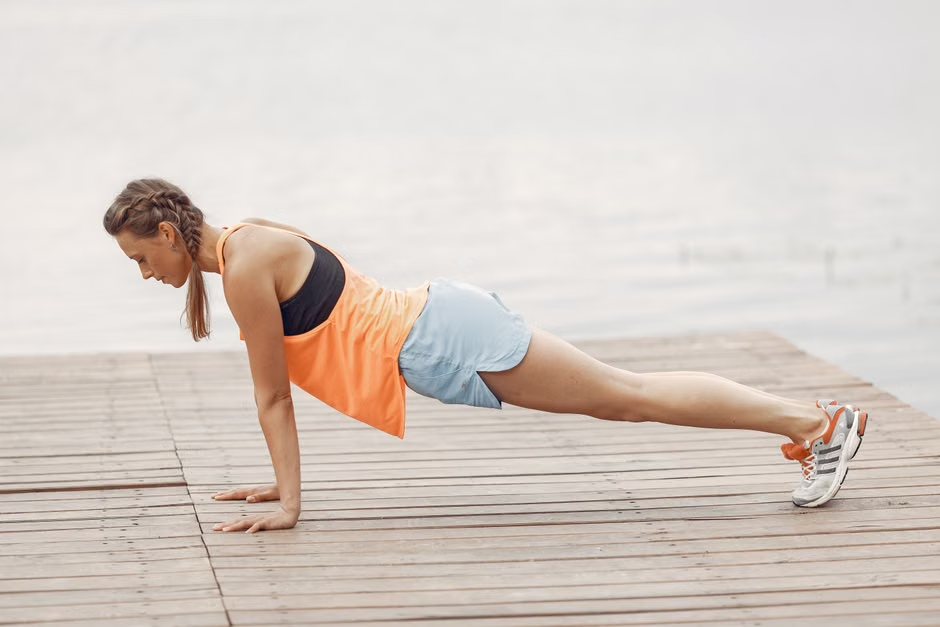
To do a proper pushup, place your hands slightly wider than shoulder-width, keep your body in a straight line from head to heels, brace your core, lower your chest under control, keep your elbows at about a 30- to 45-degree angle, and press back up without letting your hips sag or your shoulders shrug.
A proper pushup should feel like a moving plank. Your chest, shoulders, triceps, core, glutes, and legs all work together to control the movement.
On This Page
Why Pushups Matter
Pushups are a foundational movement because they train strength, control, and stability using only body weight. They are common in fitness programs, athletic training, military readiness, group exercise classes, and personal training sessions.
From an exercise science perspective, the pushup is valuable because it combines upper-body pushing strength with trunk stability. That means your chest and arms are not working alone. Your core, hips, legs, and shoulder stabilizers all help maintain posture and control.
Builds Upper-Body Strength
Pushups train the chest, shoulders, and triceps through a functional pushing pattern.
Improves Core Stability
A proper pushup requires your torso and hips to stay stable from start to finish.
Teaches Body Control
Good pushup technique helps develop awareness of posture, breathing, and joint position.
Muscles Worked During a Pushup
A pushup is often described as a chest exercise, but it is really a full-body strength movement. The main movers press the body away from the floor, while stabilizing muscles keep the spine, shoulders, and hips in position.
| Muscle Group | Role in the Pushup |
|---|---|
| Chest | Helps press the body away from the floor. |
| Shoulders | Assist with pressing and shoulder control. |
| Triceps | Extend the elbows during the upward phase. |
| Core | Keeps the torso from sagging, twisting, or arching. |
| Glutes and Legs | Help maintain a strong plank position from head to heels. |
How to Do a Proper Pushup: Step by Step
The best way to learn a pushup is to slow it down. Focus on setup first, then lowering, pressing, and breathing.
Step 1: Set Your Hands
Place your hands on the floor slightly wider than shoulder-width. Your fingers should point forward or slightly outward. Spread your fingers and press through the whole hand, not just the heel of the palm.
Step 2: Create a Strong Plank
Step your feet back and form a straight line from your head to your heels. Squeeze your glutes, brace your core, and avoid letting your hips drop toward the floor.
Step 3: Position Your Shoulders
Keep your shoulders down and away from your ears. Your shoulder blades should move naturally as you lower and press, but your shoulders should not shrug forward or collapse.
Step 4: Lower Under Control
Bend your elbows and lower your chest toward the floor. Keep your elbows at about a 30- to 45-degree angle from your body. Avoid flaring your elbows straight out to the sides.
Step 5: Press Back Up
Press the floor away and return to the starting position. Keep your body moving as one unit. Do not let your chest rise before your hips or your hips rise before your chest.
Step 6: Breathe With Control
Inhale as you lower. Exhale as you press back up. Breathing helps maintain rhythm, control, and tension through the movement.
Proper Pushup Form Checklist
- Hands are slightly wider than shoulder-width.
- Body stays in a straight line from head to heels.
- Core and glutes stay engaged.
- Elbows angle about 30 to 45 degrees from the body.
- Chest lowers under control.
- Shoulders do not shrug toward the ears.
- Chest and hips rise together during the press.
Beginner Pushup Modifications
If a floor pushup is too challenging, modify the exercise instead of practicing poor form. A good modification helps you train the same pattern while reducing the load.
| Modification | Best For |
|---|---|
| Wall Pushup | Beginners learning the basic pushing pattern. |
| Incline Pushup | Students building toward full floor pushups while keeping strong alignment. |
| Knee Pushup | Reducing load while still practicing upper-body pressing. |
| Eccentric Pushup | Building control by slowly lowering from the top position. |
Pushup Progressions
Once you can complete several proper pushups with strong form, you can progress the movement. Progressions should make the exercise more challenging without sacrificing technique.
Tempo Pushup
Lower slowly for three to five seconds to increase control and time under tension.
Pause Pushup
Pause briefly near the bottom to improve strength and positioning.
Decline Pushup
Elevate the feet to increase upper-body demand.
Common Pushup Mistakes
Letting the hips sag
Sagging hips usually mean the core and glutes are not engaged. Think of the pushup as a moving plank.
Flaring the elbows too wide
Elbows flared straight out to the sides can place extra stress on the shoulders. Keep the elbows closer to a 30- to 45-degree angle.
Only moving halfway
Partial reps can limit strength development. Use a modification if you cannot control the full range of motion yet.
Leading with the head
Do not reach your head toward the floor. Keep your neck neutral and move your body as one unit.
Frequently Asked Questions
What is the proper way to do a pushup?
The proper way to do a pushup is to keep your hands slightly wider than shoulder-width, brace your core, maintain a straight line from head to heels, lower with control, keep your elbows at about 30 to 45 degrees, and press back up without sagging or shrugging.
Should my chest touch the floor during a pushup?
Your chest should lower close to the floor while you maintain control and alignment. If touching the floor causes your shoulders to collapse or your hips to sag, use a modification and build strength first.
Are knee pushups effective?
Yes. Knee pushups can be effective when performed with good alignment. Incline pushups are another strong option because they closely match the full-body position of a standard pushup.
Why do my shoulders hurt during pushups?
Shoulder discomfort may come from flared elbows, poor shoulder control, too much volume, limited strength, or lowering too far without control. Stop if pain is sharp or persistent, and consider working with a qualified fitness or healthcare professional.
How many pushups should a beginner do?
A beginner should start with a number they can perform with good form. That might be three full pushups, eight incline pushups, or ten wall pushups. Quality matters more than quantity.
Key Takeaways
- A proper pushup should look like a moving plank.
- Keep your hands slightly wider than shoulder-width and your elbows at about 30 to 45 degrees.
- Brace your core, squeeze your glutes, and keep your body in a straight line.
- Use wall, incline, or knee pushups if you cannot maintain good form on the floor.
- Good pushup technique builds strength, stability, and body control.
How Lionel University Prepares Exercise Science Students
Learning how to do a proper pushup is about more than memorizing a movement. It is about understanding anatomy, joint position, muscle action, coaching cues, progression, regression, and safety.
Lionel University’s exercise science programs help students build the academic foundation behind practical fitness skills. Students explore how the body moves, adapts, strengthens, and recovers so they can apply exercise science principles in real-world coaching, training, wellness, and performance settings.
Conclusion
A proper pushup is one of the best examples of simple movement done well. It trains strength, stability, posture, and control without requiring any equipment.
Start with the version you can perform correctly. Build strength through consistent practice. As your form improves, progress slowly and keep the goal the same: strong alignment, controlled movement, and quality repetitions.
Where to Go Next
View Degree and Certificate Programs