Introduction
Leadership is a critical skill in today's fast-paced and competitive world. Whether you're leading a team, managing a project, or inspiring others, mastering leadership basics is essential for success. This comprehensive guide will help you build a strong foundation for your leadership journey, equipping you with the tools, insights, and strategies needed to excel.
Big Idea Question
How can the principles in this guide help you apply mastering leadership basics: build your foundation for success more effectively?
Lesson Summary
Leadership is a critical skill in today's fast-paced and competitive world. Whether you're leading a team, managing a project, or inspiring others, mastering leadership basics is essential for success. This comprehensive guide will help you build a strong foundation for your.
Why Leadership Matters
Effective leadership is not just about managing people; it's about inspiring and guiding them toward achieving shared goals. Leaders influence organizational culture, drive innovation, and motivate teams. A strong leader can turn challenges into opportunities and create a lasting impact.
The Benefits of Great Leadership
- Improved Team Performance: Good leaders foster collaboration and accountability.
- Increased Employee Satisfaction: A leader who communicates well and values their team boosts morale.
- Enhanced Organizational Success: Strong leadership aligns teams with organizational goals.
- Personal Growth: Leadership cultivates resilience, adaptability, and confidence.
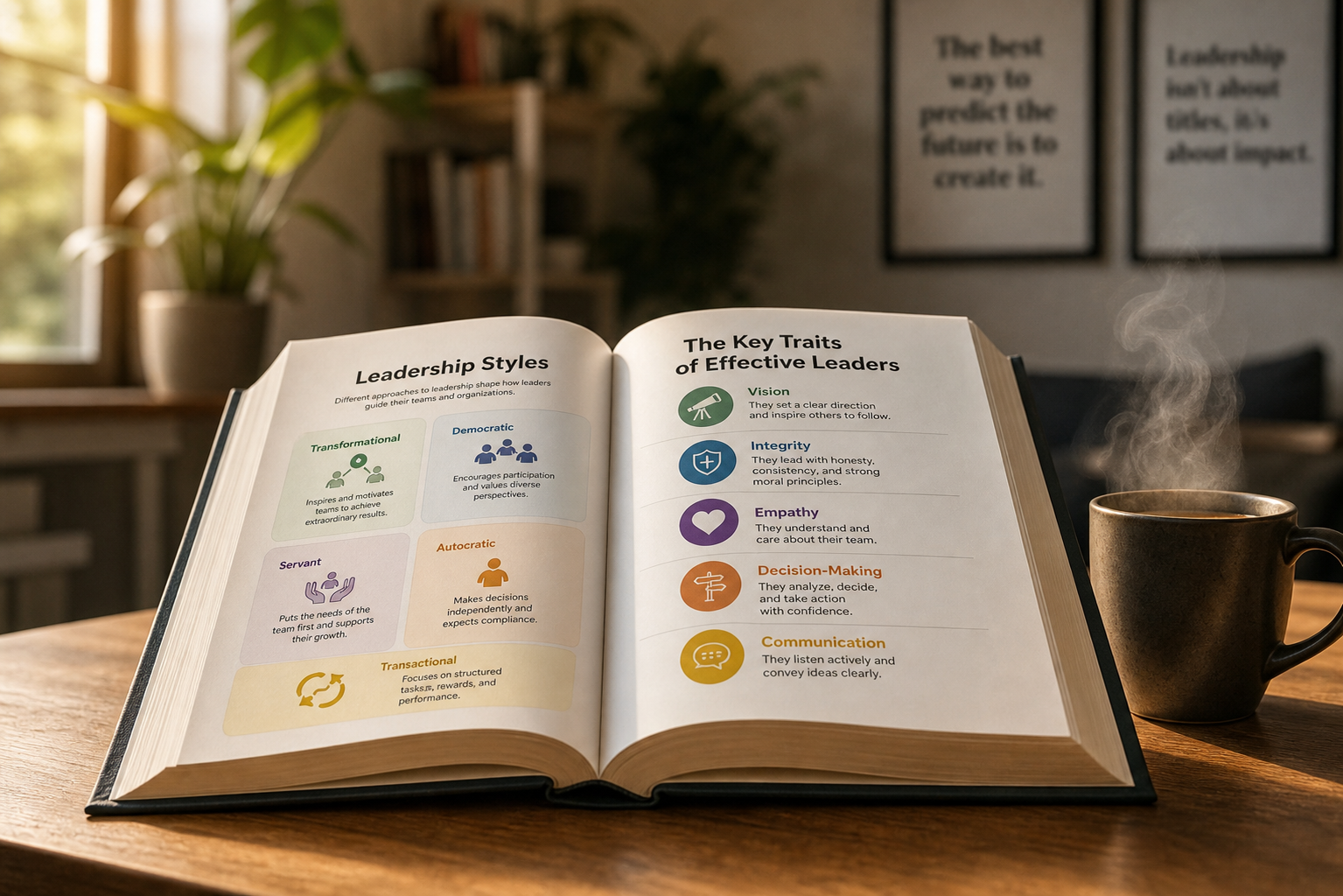
Key Traits of Effective Leaders
The foundation of great leadership starts with embodying essential traits. These characteristics inspire trust, build credibility, and foster team cohesion.
1. Self-Awareness
Self-awareness is the cornerstone of effective leadership. Leaders must understand their strengths, weaknesses, and values to make informed decisions and build authentic relationships.
- Tip: Regular self-reflection and feedback from peers can enhance self-awareness.
2. Empathy
Empathy allows leaders to connect with their teams, understand their perspectives, and address their concerns.
- Why It Matters: Empathetic leaders create inclusive and supportive environments that improve team performance.
3. Adaptability
The ability to navigate change and remain flexible in challenging situations is a hallmark of great leaders.
- Practical Application: Embrace new technologies, adjust strategies, and stay open to feedback.
4. Accountability
Leaders must take responsibility for their actions and decisions. Accountability builds trust and sets a standard for others to follow.
- Action Step: Own your mistakes and create a culture where accountability is valued.
The Core Leadership Styles
Understanding leadership styles helps leaders adapt to different team needs and organizational contexts.
1. Autocratic Leadership
Autocratic leaders make decisions independently, focusing on control and efficiency.
- Best For: Crisis management or when quick decisions are needed.
- Potential Pitfall: Can lead to low team morale if overused.
2. Democratic Leadership
Democratic leaders encourage collaboration and value team input.
- Best For: Fostering innovation and problem-solving.
- Strength: Builds trust and empowers team members.
3. Laissez-Faire Leadership
This hands-off approach works well with highly skilled, self-motivated teams.
- Best For: Creative industries or research environments.
- Challenge: Requires strong team dynamics to succeed.
4. Transformational Leadership
Transformational leaders inspire and motivate through vision and innovation.
- Impact: Drives change and elevates organizational culture.
- Ideal Scenario: Leading through major transitions or fostering long-term growth.
The Role of Emotional Intelligence (EI)
Emotional intelligence is essential for leadership. Leaders with high EI can navigate complex interpersonal dynamics, manage conflicts, and build strong relationships.
Components of Emotional Intelligence
- Self-Awareness: Recognizing and understanding your emotions.
- Self-Regulation: Managing emotions constructively.
- Empathy: Understanding the emotions of others.
- Social Skills: Building and maintaining effective relationships.
Practical Tools for Leadership Development
Leadership is a skill that evolves with practice and commitment. Here are actionable tools to develop your leadership capabilities.
1. Reflective Practices
Regularly assess your decisions, actions, and outcomes. Reflection enhances self-awareness and continuous improvement.
2. Set SMART Goals
Specific, Measurable, Achievable, Relevant, and Time-bound goals help leaders stay focused and achieve results.
3. Seek Feedback
Feedback from peers, mentors, and team members provides valuable insights for growth.
4. Build a Leadership Philosophy
A personal leadership philosophy guides your actions and decisions. Include your values, beliefs, and principles to stay grounded.
Leadership in Action: Real-World Examples
Learning from successful leaders can provide inspiration and practical insights.
Case Study: Satya Nadella
As CEO of Microsoft, Satya Nadella transformed the company’s culture by emphasizing empathy, collaboration, and innovation. His leadership approach fostered growth and innovation, propelling Microsoft to new heights.
Lesson: A leader’s focus on emotional intelligence and adaptability can drive cultural and organizational success.
Challenges Leaders Face
Every leader encounters obstacles. Understanding and preparing for these challenges ensures long-term success.
1. Managing Resistance to Change
Team members may resist new initiatives or changes in strategy.
- Solution: Communicate the vision clearly and involve the team in the change process.
2. Navigating Conflict
Conflicts are inevitable in any organization.
- Solution: Address conflicts promptly and foster an open, solution-focused dialogue.
3. Balancing Task and People Orientation
Leaders must balance achieving results with supporting their teams.
- Solution: Develop emotional intelligence to address both needs effectively.
Conclusion: Building Your Leadership Foundation
Leadership is a journey of self-discovery, growth, and influence. By understanding key traits, mastering leadership styles, and applying practical tools, you can build a strong foundation for success. Remember, leadership is not a destination but a continuous process of learning and evolving.
Whether you’re leading a small team or steering an entire organization, the principles outlined here will equip you to lead with confidence and purpose. Start today and embrace the challenge of becoming the leader you aspire to be.
Continue Building Your Fitness and Leadership Knowledge
Explore Lionel University’s educational pathways to continue developing your knowledge of exercise science, fitness leadership, and professional practice.