Fitness Marketing
Cardiovascular
The Evolution and Purpose of the Cardiovascular System

Matthew Habecker, CMCO
Introduction
The human cardiovascular system is an intricate network that sustains life in every corner of our body. At its core, this system transports blood, delivering essential oxygen and nutrients while removing waste.
But this essential system wasn’t always as it is today. Its origins are deeply connected to our evolutionary journey from ocean-dwelling organisms to complex land-based beings. Understanding how the cardiovascular system evolved provides insight into not just its current functions but also its broader purpose in maintaining life.
In this article, we’ll explore the evolutionary roots of the cardiovascular system, discuss its design, and unravel the question of purpose from both a scientific and philosophical perspective.
The Big Idea
The cardiovascular system solved one of the fundamental challenges of complex life: how to deliver essential materials to cells that can no longer interact directly with the outside environment.
Its heart, vessels, and blood work together to maintain the internal conditions required for life while reflecting an evolutionary history that began in ancient aquatic environments.
On This Page
The Oceanic Origins of Life
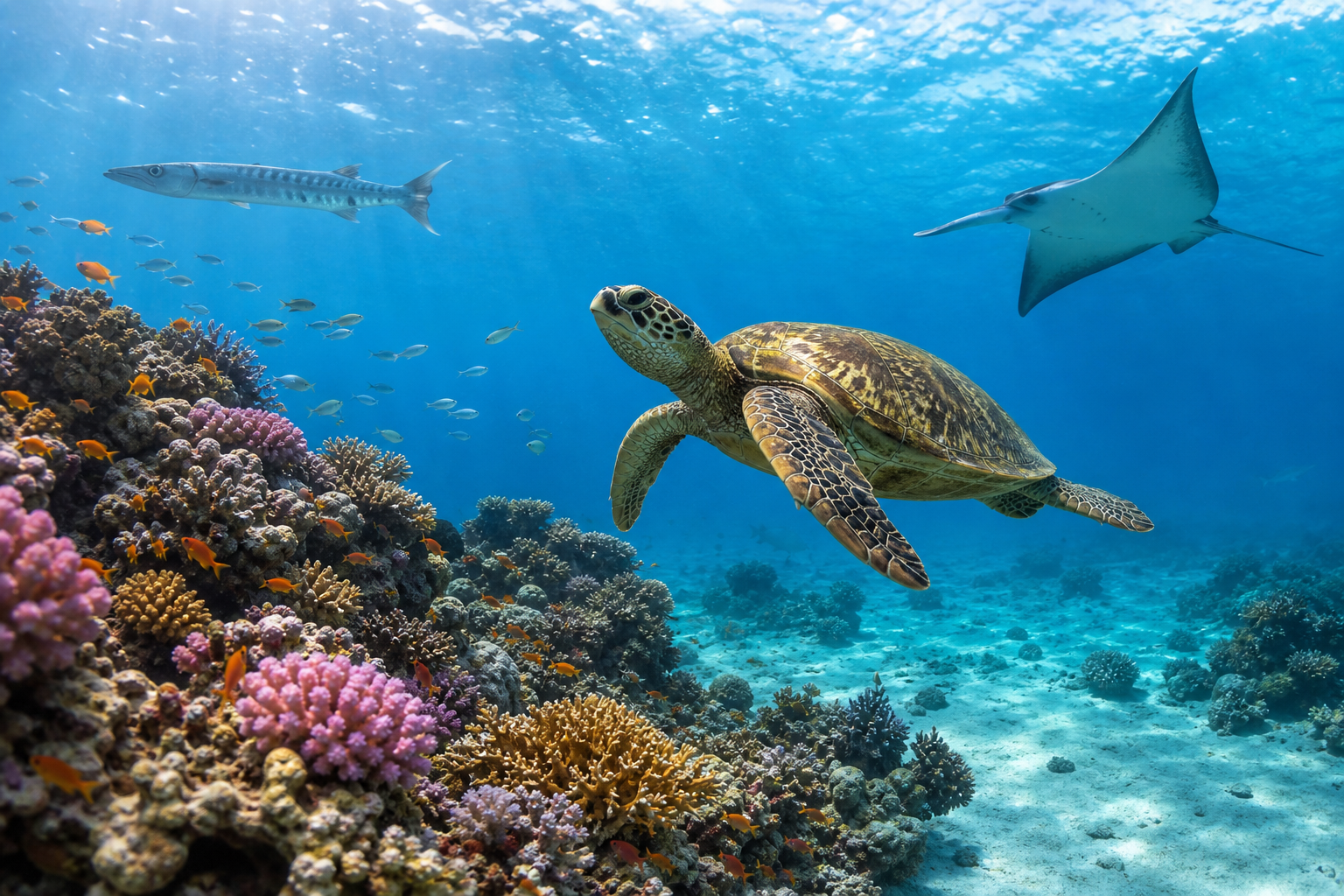
Around 3.8 billion years ago, life began in the oceans. Early single-celled organisms thrived in this aquatic environment, which provided them with a direct source of nutrients and other materials necessary for survival.
These primitive cells absorbed essential molecules from the surrounding water and released waste products into the same environment.
This arrangement worked well as long as organisms were small and could remain in direct contact with their surroundings. However, as life became more complex and multicellular organisms developed, direct exchange between every cell and the external environment was no longer possible.
Complex life created a new biological challenge: how do you deliver resources to cells located deep inside a growing organism?
Solving that problem helped drive the development of increasingly sophisticated internal transport systems.
Carrying the Ocean Inside: The Evolution of Blood
As early life transitioned from single-celled to multicellular organisms, a need arose for internal transport mechanisms. Organisms developed internal spaces and primitive channels through which fluids could move.
As circulatory systems became more sophisticated, these internal fluids could transport oxygen, nutrients, signaling molecules, and waste between different parts of the organism.
An “Internal Ocean”
A useful way to visualize this evolutionary development is to think of body fluids as an internal environment. Instead of every cell depending directly on an external aquatic environment, circulation helps maintain the conditions cells need inside the organism.
Blood contains water, dissolved salts, proteins, cells, nutrients, gases, and many other substances that support cellular function.
By developing effective internal circulation, animals could become larger, more specialized, and more mobile while maintaining the stable internal conditions required for life.
The Components of the Cardiovascular System
The cardiovascular system is composed of three primary elements: the heart, blood vessels, and blood. Each plays a vital role in sustaining life.
1. The Heart: The Central Pump
The heart is the central pump of the cardiovascular system. It moves blood throughout the body, helping ensure tissues receive the oxygen and nutrients they need.
The human heart beats roughly 100,000 times per day, although the exact number varies with heart rate and activity. Over that time, it can move thousands of liters of blood through the circulation.
Two Sides, Two Circulations
The right side of the human heart pumps blood toward the lungs, while the left side pumps oxygen-rich blood through the systemic circulation to the rest of the body.
2. Blood Vessels: The Network of Life
Blood vessels act as pathways carrying blood throughout the body. The three major types are arteries, veins, and capillaries.
Arteries
Arteries carry blood away from the heart and distribute it toward tissues and organs.
Veins
Veins return blood toward the heart. Many veins contain valves that help prevent backward blood flow.
Capillaries
Capillaries are microscopic vessels where gases, nutrients, fluids, and waste products can move between the blood and surrounding tissues.
3. Blood: The Life-Giving Fluid
Blood serves as the transport medium of the cardiovascular system. It is composed of red blood cells, white blood cells, platelets, and plasma.
Oxygen Transport
Red blood cells contain hemoglobin, which carries oxygen from the lungs toward tissues and participates in carbon dioxide transport.
Immune Defense
White blood cells and other immune components travel through the circulation to help defend against infection and respond to injury.
Clotting
Platelets and clotting proteins help limit blood loss when vessels are damaged.
Transport and Regulation
Plasma carries nutrients, hormones, electrolytes, proteins, and metabolic waste while contributing to fluid and acid-base balance.
Understanding the Purpose of the Cardiovascular System
The cardiovascular system’s primary biological role is to help maintain homeostasis—the relatively stable internal environment required for normal physiological function.
1. Oxygen and Nutrient Delivery
The cardiovascular system supplies oxygen and essential nutrients to tissues throughout the body.
Oxygen supports cellular respiration, while nutrients absorbed from food provide materials required for energy production, growth, maintenance, and repair.
2. Waste Removal
As cells perform their functions, they generate metabolic byproducts. The cardiovascular system transports substances such as carbon dioxide toward the lungs and carries other waste products toward organs such as the liver and kidneys.
3. Temperature Regulation
Blood helps redistribute heat throughout the body. Changes in skin blood flow can help either dissipate heat when body temperature rises or conserve heat when necessary.
4. Hormone Transport and Immune Response
Blood acts as an important communication network, carrying hormones from endocrine glands toward their target tissues.
The circulation also transports immune cells and signaling molecules to areas of infection, inflammation, or injury.
The cardiovascular system does not perform one isolated job. It integrates transportation, communication, temperature control, defense, and waste management throughout the body.
The Evolutionary Advantage: Why Did We Evolve a Circulatory System?
Why did increasingly complex organisms develop internal circulatory systems?
The central challenge was distance. In very small organisms, diffusion can move substances across relatively short distances. As bodies became larger, however, cells deep inside the organism required a faster and more efficient transportation system.
Larger Bodies
Circulation allowed cells farther from the external environment to receive essential materials.
Greater Mobility
Efficient transport helped support tissues with higher metabolic demands and greater levels of physical activity.
Specialized Organs
Reliable internal transport supported the evolution of increasingly specialized tissues and organ systems.
The development of circulation therefore helped enable greater body size, mobility, specialization, and physiological complexity.
Purpose and Teleology: A Philosophical Exploration
When we describe the functions of the cardiovascular system, we often imply purpose. We say that the heart’s purpose is to pump blood or that a particular blood vessel exists to supply a tissue.
But what does it mean to assign purpose to a biological system?
The concept of teleology deals with explanations based on purposes, goals, or ends. Ancient philosophers such as Aristotle frequently discussed biological structures in terms of the functions they appeared to serve.
Modern evolutionary biology can instead use the concept of teleonomy. Teleonomy describes how biological systems can appear goal-directed because traits that supported survival and reproduction were preserved through natural selection.
Function Through Evolution
The cardiovascular system behaves as though it was built for transportation because organisms with more effective circulation were better able to survive, function, and reproduce.
Adaptive Responses of the Cardiovascular System During Exercise
One of the most fascinating aspects of the cardiovascular system is its adaptability.
During exercise, muscles require more oxygen and nutrients while producing greater amounts of heat and metabolic byproducts. The cardiovascular system responds rapidly to meet those demands.
1. Increased Heart Rate and Cardiac Output
Heart rate increases during exercise, helping the body move more blood through the circulation.
Cardiac output—the amount of blood pumped by the heart per minute—also rises as exercise intensity increases.
2. Redistribution of Blood Flow
The body redirects blood flow toward active skeletal muscles during exercise while circulation to some less immediately active tissues can decrease.
This helps prioritize oxygen and nutrient delivery to tissues with the greatest metabolic demand.
3. Enhanced Oxygen Extraction
Working muscles extract a greater proportion of oxygen from the blood as exercise intensity rises, supporting increased energy production.
4. Thermoregulation
Exercise generates heat. Blood flow toward the skin can increase, helping transport heat from deeper tissues toward the body’s surface where it can be dissipated.
5. Long-Term Adaptations
With regular exercise, the cardiovascular system undergoes longer-term changes that can improve cardiovascular function and exercise capacity.
Heart Adaptations
Training can improve the heart’s ability to pump blood effectively, particularly during endurance exercise.
Vascular Adaptations
Regular activity can support healthy vascular function and the regulation of blood flow.
Greater Efficiency
The integrated cardiovascular and muscular systems become better able to deliver and use oxygen during physical activity.
Cardiovascular System Failure: Heart Disease and Circulatory Disorders
Despite its remarkable capabilities, the cardiovascular system is not immune to disease or dysfunction.
Heart disease, high blood pressure, and other circulatory disorders can interfere with blood flow, cardiac function, or the delivery of oxygen and nutrients to tissues.
Understanding how central cardiovascular function is to human health reinforces the importance of behaviors that support this system.
Regular physical activity, appropriate nutrition, sleep, and other healthy lifestyle practices can all contribute to cardiovascular health.
The Bigger Picture: Connecting to Our Evolutionary Past
The cardiovascular system is more than a network of vessels and pumps—it is part of a biological story extending back billions of years.
From simple organisms exchanging substances directly with aquatic environments to complex animals maintaining an internal circulation, cardiovascular evolution reflects the increasing demands created by greater size, movement, and specialization.
Understanding this connection can deepen our appreciation for both the complexity and resilience of the human body.
Key Takeaways: The Evolution and Purpose of the Cardiovascular System
- Early life evolved in aquatic environments where small organisms could exchange materials directly with their surroundings.
- As organisms became larger and more complex, internal transport systems became increasingly important.
- The cardiovascular system consists primarily of the heart, blood vessels, and blood.
- Circulation supports oxygen and nutrient delivery, waste removal, temperature regulation, hormonal communication, and immune function.
- The cardiovascular system helps maintain homeostasis by connecting tissues throughout the body.
- Exercise dramatically increases cardiovascular demand, while repeated training can produce long-term physiological adaptations.
- The cardiovascular system represents an evolutionary solution to the challenge of sustaining complex, active, multicellular life.
Frequently Asked Questions
What is the primary purpose of the cardiovascular system?
The cardiovascular system transports blood throughout the body, delivering oxygen, nutrients, hormones, and immune components while helping remove waste and regulate the internal environment.
Why did circulatory systems evolve?
As multicellular organisms became larger, diffusion alone could not efficiently move oxygen, nutrients, signals, and waste over greater distances. Circulation provided a faster internal transportation system.
Is blood really similar to seawater?
Blood plasma and seawater both contain water and dissolved ions, which makes the comparison useful as an evolutionary metaphor. However, their actual chemical compositions and concentrations differ substantially.
What are the main components of the cardiovascular system?
The cardiovascular system is composed of the heart, blood vessels, and blood. Together, they create the network through which circulation occurs.
What happens to the cardiovascular system during exercise?
Heart rate and cardiac output increase, blood flow is redirected toward active tissues, muscles extract more oxygen from the blood, and circulation contributes to heat regulation.
How does exercise improve cardiovascular function?
Regular exercise can produce adaptations in cardiac function, blood vessels, circulation, and oxygen transport that improve the body’s ability to respond to physical activity.
Understanding the Cardiovascular System’s Evolutionary Story
The cardiovascular system’s primary role is to sustain life by delivering essential substances to tissues, removing waste products, and helping maintain homeostasis.
Its structure also reflects a long evolutionary journey from organisms that depended directly on aquatic environments to complex animals capable of maintaining highly regulated internal circulation.
By understanding the cardiovascular system’s functions, evolutionary origins, and adaptability, we gain a deeper appreciation for one of the most important systems in the human body.
Every heartbeat represents both an immediate act of survival and the continuation of an evolutionary story billions of years in the making.
Learn the Science Behind the Human Body
Interested in understanding how anatomy, physiology, exercise, and human adaptation work together? Lionel University offers certificate and degree pathways designed for current and future fitness and exercise science professionals.