Cardiorespiratory Fitness

Exercise physiology is where science, health, and movement come together.
Most people know what a personal trainer does. A trainer helps clients exercise, build strength, and improve fitness. An exercise physiologist often works in a more advanced and science-based role.
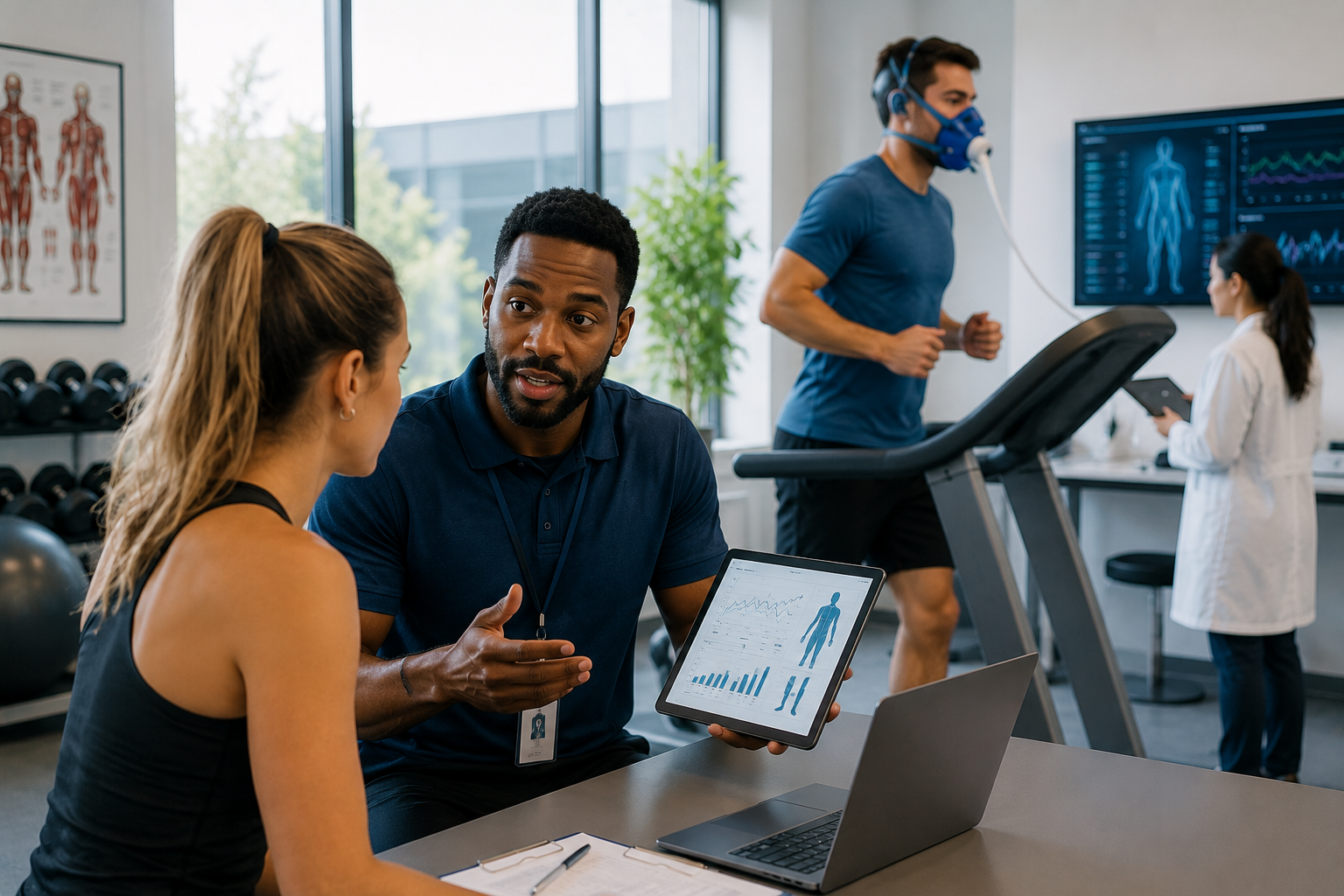
An exercise physiologist studies how the body responds to exercise. They may help a patient recover after heart surgery, support someone managing diabetes, test an athlete’s endurance, or help a company create an employee wellness program.
In this field, exercise is not just a workout. It can be used as a carefully planned health, recovery, and performance tool.
This article explains the main types of exercise physiologist jobs, how clinical and fitness roles differ, which certifications may help, and how to start building a career in exercise physiology.
Quick Answer
Exercise physiologist jobs can be found in hospitals, cardiac rehabilitation centers, pulmonary rehabilitation programs, sports performance facilities, research laboratories, corporate wellness programs, universities, and fitness centers.
Common roles include clinical exercise physiologist, cardiac rehabilitation specialist, exercise specialist, sports performance physiologist, corporate wellness coordinator, research assistant, and tactical performance specialist.
Most exercise physiologist careers require a degree in exercise science, kinesiology, exercise physiology, or a related field. Some positions also require certification, clinical hours, CPR/AED training, and hands-on experience.
Exercise physiologist jobs matter because exercise can support health in powerful ways.
Physical activity can help improve heart health, blood sugar control, muscle strength, endurance, weight management, mobility, and quality of life. However, exercise is not the same for every person.
A patient recovering from heart surgery may need a carefully monitored exercise plan.
A person with Type 2 diabetes may need exercise that supports blood sugar control and long-term adherence.
An athlete may need performance testing, workload monitoring, and sport-specific conditioning.
Firefighters, military personnel, and first responders may need training for strength, endurance, load carriage, and recovery.
Exercise physiologists help match exercise to the individual. They use science, testing, monitoring, and communication to make physical activity safer and more effective.
Exercise physiologist jobs are careers that use exercise science to improve health, recovery, fitness, or performance.
Exercise physiologists study how the heart, lungs, muscles, metabolism, hormones, and nervous system respond to physical activity.
They may help people:
| Job Title | Main Focus |
|---|---|
| Clinical Exercise Physiologist | Uses exercise in healthcare settings. |
| Cardiac Rehabilitation Specialist | Helps heart patients exercise safely. |
| Exercise Specialist | Supports fitness, wellness, or clinical programs. |
| Sports Performance Physiologist | Tests and trains athletes. |
| Corporate Wellness Coordinator | Builds workplace health programs. |
| Research Assistant | Supports exercise science studies. |
| Tactical Performance Specialist | Trains military personnel, police officers, firefighters, and first responders. |
Exercise physiologists, personal trainers, and physical therapists all work with movement. However, their education, responsibilities, and professional scope differ.
| Role | Main Focus | Typical Setting |
|---|---|---|
| Personal Trainer | General fitness coaching for primarily healthy clients | Gyms, studios, private or online coaching |
| Exercise Physiologist | Exercise testing and programming for health, clinical, fitness, or performance goals | Hospitals, clinics, wellness centers, sports laboratories |
| Physical Therapist | Diagnosis and treatment of movement limitations, injuries, and functional problems | Clinics, hospitals, rehabilitation centers |
Knowing the difference helps students choose the right career and helps patients or clients find the right professional.
Example: A person recovering after a heart event may need a clinical exercise physiologist. A person recovering from knee surgery may need a physical therapist. A healthy adult seeking general fitness coaching may work with a personal trainer.
Exercise physiology careers are based on understanding how the body responds and adapts to movement.
Includes the heart and blood vessels. Exercise physiologists study heart rate, blood pressure, circulation, and oxygen delivery.
Example: Monitoring heart rhythm during cardiac rehabilitation.
Includes the lungs and breathing. Professionals study oxygen intake, carbon dioxide removal, and exercise tolerance.
Example: Supporting a person with lung disease during pulmonary rehabilitation.
Describes how the body creates and uses energy. Exercise physiologists study blood sugar, fuel use, and fat metabolism.
Example: Using aerobic and resistance training to support Type 2 diabetes management.
Creates force and movement. Professionals study strength, fatigue, recovery, and adaptation.
Example: Testing strength and power in an athlete.
Controls movement, coordination, and muscle activation.
Example: Training reaction time, balance, coordination, and movement efficiency.
Exercise physiologist jobs often follow a clear process.
Step 1
The first step is learning about the person’s health, goals, medications, symptoms, injury history, fitness level, and work or sport demands.
Example: A cardiac rehabilitation patient may need a complete health review before beginning exercise.
Step 2
Testing may include resting heart rate, blood pressure, VO2 max, strength, balance, flexibility, body composition, metabolic testing, or ECG monitoring.
Example: A performance laboratory may measure an athlete’s VO2 max to estimate endurance capacity.
Step 3
The plan may include cardiovascular exercise, strength training, mobility, balance, recovery strategies, education, and progress tracking.
Example: A patient with heart disease may begin with a low-to-moderate intensity program and close monitoring.
Step 4
Professionals may monitor heart rate, blood pressure, breathing, oxygen levels, symptoms, fatigue, exercise tolerance, and performance data.
Example: During a hospital-based session, a specialist may monitor ECG information while the patient exercises.
Step 5
Exercise plans should change based on data, symptoms, goals, progress, and safety.
If a program is too easy, progress may slow. If it is too demanding, safety, motivation, and recovery may be affected.
Clinical exercise physiologist jobs are commonly found in healthcare settings. These professionals work with patients who may have medical conditions or elevated health risks.
Common settings include:
Clinical exercise physiologists may work with patients who have:
Cardiac rehabilitation is one of the most common clinical career paths for exercise physiologists.
Cardiac rehabilitation helps people recover after heart events or procedures, including:
Many patients are nervous about exercising after a heart problem. A cardiac rehabilitation specialist helps them rebuild trust in their body through safe progression, education, monitoring, and support.
Exercise physiologists can help people manage chronic conditions through safe, realistic, and individualized exercise plans.
Aerobic exercise, resistance training, and daily movement may support blood sugar control and metabolic health.
Pulmonary rehabilitation may improve endurance, breathing control, activity tolerance, and confidence.
Exercise may support strength, weight management, blood pressure, blood sugar control, and quality of life.
Exercise programs may address fatigue, mobility, strength, function, and confidence during or after treatment.
Not all exercise physiologist jobs are found in hospitals. Some professionals work with athletes, tactical populations, and active adults.
These roles may be found in:
Exercise physiologists may also work with military personnel, law enforcement officers, firefighters, and first responders. Training may focus on strength, endurance, load carriage, mobility, heat stress, readiness, and recovery.
Companies may hire exercise physiologists to improve employee health, reduce health risks, and create practical wellness initiatives.
This work focuses on prevention. Instead of waiting for health problems to develop, workplace wellness programs aim to support healthier habits earlier.
Exercise physiologists may also work in research, education, or academic laboratories.
Research assistants or coordinators may study:
Responsibilities may include recruiting participants, running tests, collecting data, entering results, following research protocols, and helping manage studies.
Some exercise physiologists teach laboratory courses, support student learning, manage testing facilities, or conduct research. Advanced teaching and research positions often require a master’s degree or doctorate.
Professional certification can help demonstrate knowledge and may be preferred or required by some employers.
| Certification Area | Potential Value |
|---|---|
| ACSM Certified Exercise Physiologist | Supports professional roles involving exercise testing and program design. |
| ACSM Clinical Exercise Physiologist | May support advanced clinical exercise physiology positions. |
| ASEP Exercise Physiologist Certified | Focuses on professional standards for exercise physiologists. |
| Strength and Conditioning Credentials | May support sports, performance, or tactical roles. |
| CPR/AED Certification | Common safety requirement for clinical, fitness, and performance environments. |
| Health Coaching Credentials | May support behavior change, preventive health, and wellness roles. |
Clinical hours can be important for healthcare-oriented roles. Students may gain experience in cardiac rehabilitation, pulmonary rehabilitation, hospitals, medical fitness centers, or clinical exercise testing environments.
Professional credentials often require continuing education. This helps exercise physiologists stay current with research, safety guidelines, technology, and best practices.
Exercise physiologist salaries vary based on several factors.
Clinical hospital roles may pay differently than fitness center, corporate wellness, research, or sports performance roles. Professionals with advanced certifications, graduate education, leadership duties, or specialized clinical skills may have stronger earning potential.
Look for programs in exercise science, exercise physiology, kinesiology, human performance, sports science, or health science.
Observe professionals in cardiac rehabilitation, pulmonary rehabilitation, performance testing, corporate wellness, research, or fitness settings.
Review certification requirements early so you can select the right courses, internships, clinical hours, and experiences.
Seek internships, practicums, research opportunities, clinical observation, volunteer work, fitness jobs, or wellness program roles.
Consider whether you prefer patient care, sports performance, data and testing, hospitals, wellness, research, or graduate education.
Both roles support exercise, but exercise physiologists generally receive deeper training in body systems, testing, clinical exercise, and health conditions.
Exercise physiologists may also work in sports performance, corporate wellness, universities, research, fitness, and tactical environments.
Clinical exercise physiology can support people of many ages managing heart conditions, diabetes, pulmonary disease, cancer recovery, and other health concerns.
Some roles require certification, clinical hours, CPR/AED training, supervised experience, licensure, or graduate education.
Sports performance also involves testing, recovery, energy systems, biomechanics, communication, and careful program design.
Exercise physiologists may work as clinical exercise physiologists, cardiac rehabilitation specialists, exercise specialists, sports performance physiologists, corporate wellness coordinators, research assistants, or tactical performance specialists.
They may work in hospitals, rehabilitation centers, fitness facilities, sports performance centers, universities, corporate wellness programs, research laboratories, or community health settings.
A clinical exercise physiologist uses exercise testing and supervised exercise to support people with medical conditions or elevated health risks.
A cardiac rehabilitation specialist helps people exercise safely after heart problems. They may monitor heart rhythm, blood pressure, symptoms, and exercise tolerance.
A personal trainer commonly works with mostly healthy clients on general fitness. An exercise physiologist typically has deeper training in body systems, exercise testing, health conditions, and clinical or performance programming.
Common options include ACSM exercise physiology credentials, ACSM clinical exercise physiology credentials, ASEP certification, strength and conditioning credentials, and CPR/AED certification.
Not always. Some positions require a bachelor’s degree. Advanced clinical, research, teaching, leadership, or specialized performance roles may prefer or require graduate education.
Exercise physiology can be a strong career for people interested in science, health, fitness, patient care, sports performance, wellness, or research.
At Lionel University, exercise science education is designed to be clear, practical, and career-focused.
Students learn how the body responds to exercise. They also learn how movement can support health, performance, recovery, and prevention.
As a professor of Exercise Science and Human Performance, I often remind students that exercise physiology is not simply about writing workouts.
A cardiac rehabilitation patient may need close monitoring and careful progressions. An athlete may need performance testing and recovery planning. An office worker may need a realistic wellness plan that helps create more movement throughout the day.
Lionel University helps students build a foundation in exercise science, wellness, coaching, and career preparation. The goal is to help students understand the body and use exercise science to help people live, move, recover, and perform better.
Students learn how to evaluate needs, understand exercise responses, create appropriate programs, monitor outcomes, and communicate clearly with clients, athletes, patients, and professional teams.
Related Article
Related Article
Related Article
Exercise physiologist jobs can lead to many meaningful career paths.
Some professionals work in hospitals and cardiac rehabilitation. Others work in sports performance, corporate wellness, research, universities, tactical fitness, or general wellness settings.
What connects these roles is the use of exercise science. Exercise physiologists study how the body responds to movement and use that knowledge to help people recover, manage disease, improve fitness, and perform better.
For students who enjoy science, health, fitness, and helping people, exercise physiology may offer a strong and flexible career path.
Lionel University helps students build the academic and professional foundation needed to take the next step in this growing field.
View Lionel University Degree and Certificate Programs