Fitness Leadership and Management
Kinesiology
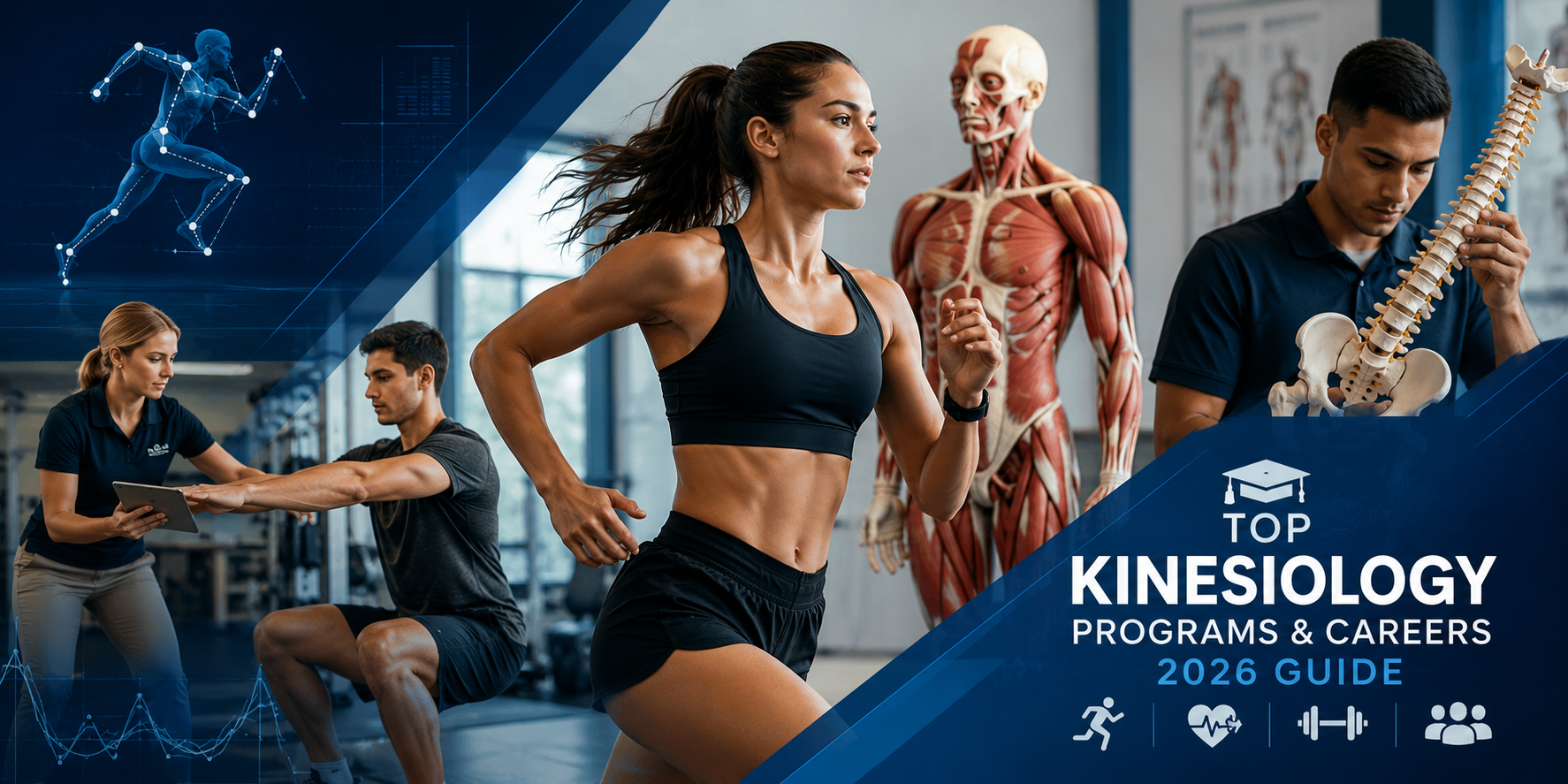
Top Kinesiology Programs and Careers: 2026 Guide

Matthew Habecker, CMCO
Top Kinesiology Programs and Careers: 2026 Guide
19:38
Introduction
The human body is built to move. It walks, runs, lifts, jumps, heals, and adapts. Kinesiology is the field that studies how all of that movement works.
If you want to help athletes perform better, patients regain function, or communities become healthier, a kinesiology or exercise science program may provide a strong educational foundation.
Modern kinesiology programs go far beyond physical education. They may include biomechanics, exercise physiology, sports medicine, wellness, motor learning, rehabilitation, strength and conditioning, and human performance.
Quick Answer
Kinesiology programs teach students how the human body moves and responds to physical activity.
Students commonly study anatomy, physiology, biomechanics, exercise physiology, motor learning, psychology, health behavior, nutrition, and wellness.
A kinesiology degree can support careers in fitness, coaching, sports performance, wellness, exercise physiology, rehabilitation support, and corporate health. It can also prepare students for graduate programs in physical therapy, occupational therapy, athletic training, sports medicine, and related healthcare fields.
The right program depends on your goals. Compare the curriculum, accreditation, faculty, internships, laboratory access, cost, flexibility, and career support before choosing a school.
On This Page
Why Kinesiology Matters
Kinesiology matters because movement affects health, fitness, recovery, independence, and quality of life.
People walk to work, lift groceries, play sports, recover from injuries, and try to remain active as they age. When movement becomes painful or limited, everyday life can become more difficult.
| Area | How Kinesiology Applies |
|---|---|
| Athletic Performance | Supports strength, speed, power, movement efficiency, recovery, and injury-risk reduction. |
| Rehabilitation | Helps professionals understand mobility, strength, balance, and return-to-activity progressions. |
| Health and Wellness | Supports active living, prevention, behavior change, and long-term physical function. |
| Healthy Aging | Applies movement science to balance, strength, mobility, fall prevention, and independence. |
| Career Development | Creates pathways into fitness, sports, wellness, rehabilitation support, research, and healthcare education. |
What Is Kinesiology?
Kinesiology is the scientific study of human movement. It examines how movement is created, controlled, learned, and improved.
The field connects several scientific disciplines, including anatomy, physiology, biomechanics, exercise physiology, psychology, motor learning, wellness, rehabilitation, and human performance.
How do muscles create movement?
How do joints handle force?
Why do injuries happen?
How does exercise improve health?
How can athletes move efficiently?
How can people regain mobility?
In simple terms, kinesiology connects science with real-world movement. Students interested in related academic pathways can explore Lionel University programs in exercise science, fitness, health, and human performance.
Kinesiology vs. Exercise Science
Kinesiology and exercise science are closely related, but they are not always identical.
| Field | Primary Focus |
|---|---|
| Kinesiology | The broad study of human movement, including sport, daily activity, motor learning, posture, psychology, wellness, and rehabilitation. |
| Exercise Science | A more focused study of exercise, training, fitness, health, performance, and physical adaptation. |
| Human Kinetics | Another term used by some institutions for the study of movement, physical activity, and performance. |
A kinesiology program may be a good fit if you want a broad understanding of movement. An exercise science program may be a better fit if you want to focus more directly on training, fitness, health, and performance.
The Science Behind Kinesiology
Kinesiology is built on movement science. Students learn how the body creates, controls, and improves movement through several connected disciplines.
Anatomy
Anatomy is the study of body structures, including muscles, bones, joints, tendons, ligaments, and organs.
Practical example: To understand a squat, students must understand how the hips, knees, ankles, spine, and surrounding muscles work together.
Physiology
Physiology examines how the body functions. Kinesiology students study the heart, lungs, muscles, nervous system, and energy systems.
Practical example: During a run, the cardiovascular and respiratory systems work harder to deliver oxygen to active muscles.
Biomechanics
Biomechanics is the study of movement and force. It helps explain posture, balance, speed, power, efficiency, and injury risk.
Practical example: A coach may analyze running form to help an athlete reduce wasted movement and improve efficiency.
Motor Learning
Motor learning examines how people acquire and improve physical skills through practice, feedback, and repetition.
Practical example: A patient relearning how to walk after an injury may need repeated practice and carefully timed feedback.
Exercise Physiology
Exercise physiology studies how the body responds and adapts to physical activity. It helps explain endurance, strength, fatigue, recovery, and long-term training adaptation.
How Kinesiology Programs Work
Kinesiology programs typically combine science courses, movement-focused coursework, practical assignments, laboratories, internships, and career preparation.
Step 1
Build a Science Foundation
Students begin with biology, chemistry, anatomy, physiology, mathematics, and statistics.
Step 2
Study Movement Science
Courses may include biomechanics, exercise physiology, motor learning, psychology, and health behavior.
Step 3
Choose a Focus Area
Students may focus on sports performance, wellness, rehabilitation, pre-allied health, or human performance.
Step 4
Gain Hands-On Experience
Applied learning may include internships, labs, practicums, research, and clinical observation.
Step 5
Prepare for Careers or Graduate School
Advising, certification guidance, resume support, and internship experience help students prepare for the next step.
Common Kinesiology Courses
Degree requirements vary by school, but many kinesiology and exercise science programs include similar core subjects.
| Course | What Students Learn |
|---|---|
| Anatomy and Physiology | Body structures and how major physiological systems function. |
| Biomechanics | Movement, force, posture, technique, balance, and injury risk. |
| Exercise Physiology | How the body responds and adapts to exercise. |
| Motor Learning | How people learn, practice, and improve movement skills. |
| Sport Psychology | Motivation, confidence, focus, stress, and behavior. |
| Nutrition | How food supports health, recovery, physical activity, and performance. |
| Research Methods | How to read, evaluate, and conduct scientific studies. |
| Statistics | How to organize, analyze, and interpret data. |
| Strength and Conditioning | How to train strength, speed, power, endurance, and recovery. |
| Health Promotion | How to encourage active living and healthier behavior. |
Specializations in Kinesiology Programs
Many programs allow students to select a concentration or emphasis that aligns with their career goals.
Sports Medicine and Human Performance
May include injury prevention, performance testing, biomechanics, athletic training preparation, and sports recovery.
Holistic Health and Wellness
May include behavior change, wellness coaching, stress management, community health, and corporate wellness.
Pre-Allied Health
May prepare students for physical therapy, occupational therapy, athletic training, physician assistant programs, or other healthcare pathways.
How to Choose the Right Kinesiology Program
The best program is not necessarily the most recognizable one. It is the program that best supports your academic, career, financial, and scheduling needs.
1. Start With Your Goal
Decide whether you are most interested in fitness, healthcare, sports, wellness, education, or research.
2. Review Accreditation
Confirm that the institution meets recognized academic quality standards.
3. Study the Curriculum
Make sure required courses support your desired career or graduate school prerequisites.
4. Ask About Applied Learning
Review laboratory work, internships, movement assessments, research, and practicum opportunities.
5. Compare Cost and Flexibility
Review tuition, financial aid, transfer policies, scheduling, and online options.
Traditional vs. Online Kinesiology Programs
Students may choose from traditional campus-based, online, or hybrid formats. Each offers different advantages.
Traditional On-Campus Programs
- Direct laboratory access
- In-person faculty interaction
- Campus research opportunities
- Athletic department experience
- Local clinical observation
Online and Hybrid Programs
- Flexible scheduling
- Less need to relocate
- Helpful for working adults and parents
- Remote advising and coursework
- Local internships or practicums
What to Check Before Choosing an Online Program
Look for internship options, faculty support, clear skill assessments, career services, local practicum opportunities, and transfer-friendly policies.
Students seeking a flexible academic path can compare Lionel University’s associate degree in exercise science, bachelor's degree programs, and master's degree programs.
Hands-On Learning and Internships
Hands-on learning is one of the most important parts of kinesiology education. It helps students turn scientific knowledge into professional skill.
Why Internships Matter
Build professional confidence
Practice communication
Apply classroom knowledge
Explore career options
Strengthen a resume
Build professional connections
Common Internship Sites
- Physical therapy clinics
- Sports performance centers
- College athletic departments
- Cardiac rehabilitation programs
- Hospitals and healthcare organizations
- Corporate wellness programs
- Community health organizations
- Research laboratories
Technology in Movement Science
Modern kinesiology uses technology to measure movement, performance, and physical response.
Wearable trackers
Force plates
Motion-capture systems
Gait-analysis systems
Heart-rate monitors
Video-analysis software
Career Paths With a Kinesiology Degree
A kinesiology degree can support several career directions. Some positions require additional certification, licensure, experience, or graduate education.
| Career | What the Role May Include |
|---|---|
| Strength and Conditioning Coach | Training athletes for strength, power, speed, conditioning, and recovery. |
| Exercise Physiologist | Designing exercise programs for health, fitness, wellness, or performance. |
| Wellness Coordinator | Developing health and activity programs for workplaces or communities. |
| Fitness Center Manager | Overseeing staff, operations, programs, and member experience. |
| Personal Trainer | Creating exercise programs and coaching clients toward health or fitness goals. |
| Rehabilitation Aide | Supporting patients and licensed rehabilitation professionals. |
| Corporate Wellness Director | Leading health, wellness, and employee-engagement programs. |
| Sports Performance Coach | Helping athletes improve movement, conditioning, readiness, and performance. |
| Research Assistant | Collecting and analyzing movement, exercise, or health data. |
Students interested in a foundational coaching credential may also explore the Lionel Certified Personal Trainer program.
Graduate School and Advanced Careers
For many students, a kinesiology degree is a starting point for advanced education in healthcare, research, rehabilitation, or human performance.
Kinesiology as a Pre-Physical Therapy Path
Kinesiology can provide a strong academic foundation for physical therapy because it commonly includes anatomy, physiology, biomechanics, and exercise science.
However, Doctor of Physical Therapy programs have specific prerequisite requirements. Students should review those requirements early and confirm that their undergraduate courses meet them.
Tips for Graduate School Preparation
- Maintain strong grades
- Complete required prerequisite courses
- Earn observation or clinical hours
- Develop faculty relationships
- Complete internships or research
- Request strong letters of recommendation
Advanced Career Paths
Physical Therapist
Occupational Therapist
Athletic Trainer
Biomechanist
Clinical Exercise Physiologist
Sports Scientist
University Professor
Physician Assistant
Salary and Job Outlook
Salaries for kinesiology graduates vary based on the job, location, education level, professional credentials, experience, and type of employer.
Entry-Level Fitness and Wellness Roles
Entry-level positions may include personal trainer, health coach, wellness coordinator, rehabilitation aide, or fitness specialist. Experience, specialization, and certifications may create opportunities for advancement.
Strength and Conditioning Roles
Strength and conditioning salaries vary widely. Coaches may work in schools, private facilities, colleges, tactical settings, or professional sports. Higher-level roles often require strong experience, professional networks, and recognized credentials.
Advanced Healthcare Careers
Students who continue into physical therapy, occupational therapy, athletic training, physician assistant studies, or other healthcare fields may qualify for advanced professional roles. These careers generally require graduate education, clinical preparation, and licensure.
Workforce Trends Supporting the Field
- Growing interest in prevention and wellness
- Aging populations
- Increased demand for rehabilitation services
- Growth in sports performance training
- Expansion of workplace wellness programs
Common Mistakes and Misconceptions
Kinesiology is only physical education
Physical education is one possible path, but kinesiology also includes sports science, wellness, rehabilitation, human performance, research, and healthcare preparation.
Online programs are always easier
Online education still requires discipline, time management, independent study, and practical experience.
All kinesiology programs lead to the same career
Programs may emphasize sports, healthcare, wellness, research, education, or performance. The curriculum and experiences can differ significantly.
A degree alone is enough
Internships, certifications, observation hours, professional relationships, and practical experience can make a major difference.
You must know your final career immediately
Students can use courses, internships, faculty guidance, and career exploration to identify the path that fits them best.
Frequently Asked Questions
What are kinesiology programs?
Kinesiology programs study human movement. Students learn about anatomy, physiology, biomechanics, exercise science, motor learning, wellness, psychology, and performance.
What can you do with a kinesiology degree?
Graduates may work in fitness, coaching, wellness, sports performance, rehabilitation support, corporate health, or exercise physiology. The degree may also support graduate school preparation.
What is the difference between kinesiology and exercise science?
Kinesiology is the broader study of human movement. Exercise science usually focuses more specifically on exercise, training, fitness, health, and physical performance.
What courses are required for kinesiology?
Common courses include anatomy, physiology, biomechanics, exercise physiology, motor learning, nutrition, psychology, statistics, and research methods.
Are online exercise science degrees respected?
Online exercise science degrees can be respected when they come from credible institutions and include strong academic coursework, faculty support, applied learning, internships, and career preparation.
What is human kinetics?
Human kinetics is another term some institutions use for the study of movement, exercise, physical activity, and performance.
Is kinesiology a good major for physical therapy?
Yes. Kinesiology can provide useful preparation in anatomy, physiology, movement, and biomechanics. Students must still complete the specific prerequisites required by each physical therapy program.
Do kinesiology students need internships?
Internships may not be required by every program, but they are strongly recommended because they help students build experience, explore careers, and make professional connections.
Key Takeaways
- Kinesiology is the scientific study of human movement.
- Programs combine science, movement, wellness, psychology, and performance topics.
- Kinesiology and exercise science overlap, but kinesiology is often the broader field.
- Common courses include anatomy, physiology, biomechanics, exercise physiology, and motor learning.
- Students may specialize in sports performance, wellness, rehabilitation, or pre-allied health.
- Internships and applied learning can strengthen professional preparation.
- A kinesiology degree can support fitness, sports, wellness, rehabilitation, and healthcare-related paths.
- The best program is the one that aligns with your academic goals, career plans, and learning needs.
How Lionel University Prepares Students
At Lionel University, exercise science and movement education is designed to be clear, practical, and connected to real career outcomes.
Students learn how the body moves and how movement connects to health, fitness, performance, recovery, coaching, and long-term well-being.
Biomechanics, for example, is not treated as a collection of equations. It is used to explain why a runner may develop knee pain, why an athlete may lose power, or why an older adult may struggle with balance.
Movement Science Foundations
Students develop knowledge in anatomy, physiology, movement, exercise, health, and performance.
Practical Application
Scientific concepts are connected to clients, athletes, communities, and real professional situations.
Career Preparation
Students prepare for coaching, wellness, fitness, performance, graduate education, and professional credentials.
Conclusion
Kinesiology programs help students understand how the body moves, performs, heals, and adapts.
The field can lead to careers in fitness, wellness, sports performance, corporate health, rehabilitation support, and exercise physiology. It can also prepare students for graduate programs in physical therapy, occupational therapy, athletic training, sports medicine, and other health professions.
The best program is the one that matches your career goals, learning style, financial needs, and long-term plans.
Where to Go Next
Explore Lionel University pathways: