Cardiorespiratory Fitness


Physical activity is good for more than building strength or losing weight.
Aerobic exercise and stress management go hand in hand.
Aerobic exercise has several benefits backed by science, including mental health support, stress relief, improved mood, and relaxation responses that can reduce physical symptoms of stress.
For fitness professionals, this matters.
Clients often come to training because they want to lose weight, build muscle, or improve endurance. But many also need better ways to manage stress, anxiety, low energy, poor sleep, or mental fatigue.
Exercise is not a replacement for mental health care. But it can be a powerful tool for supporting mental well-being.
In this article, we will explore the benefits of using aerobic exercise as part of a stress management plan.
Aerobic exercise can help manage stress by improving mood, supporting brain function, reducing anxiety symptoms, improving sleep, increasing resilience, and helping the body regulate its stress response.
Examples of aerobic exercise include walking, jogging, cycling, swimming, dancing, hiking, rowing, and low-impact cardio.
Adults should aim for regular movement throughout the week. Even short bouts of physical activity can provide benefits, especially when they are performed consistently.
Exercise as a form of stress management cannot be overlooked.
Stress remains a common challenge for many adults. Work demands, family obligations, financial pressure, health concerns, social isolation, and constant digital connection can all contribute to higher stress levels.
Many people need stress relief strategies that are accessible, affordable, and realistic.
Aerobic exercise is one of those tools.
You do not need a gym to benefit from aerobic exercise. You can walk outside, ride a bike, follow an at-home cardio workout, swim, dance, hike, or use a simple bodyweight circuit.
At-home exercises require only a little creativity and a small amount of space.
The goal is not perfection.
The goal is movement that can be repeated consistently.
For clients, this may mean starting with a 10-minute walk after work. For others, it may mean cycling three times per week, joining a group fitness class, or using a treadmill while listening to music.
The right form of aerobic exercise is often the one a client will actually do.
With less stress, day-to-day responsibilities may feel more manageable. Unexpected challenges may also become easier to handle.
Keep Reading: Stress Management Tips and Techniques for Professionals, Students and Parents
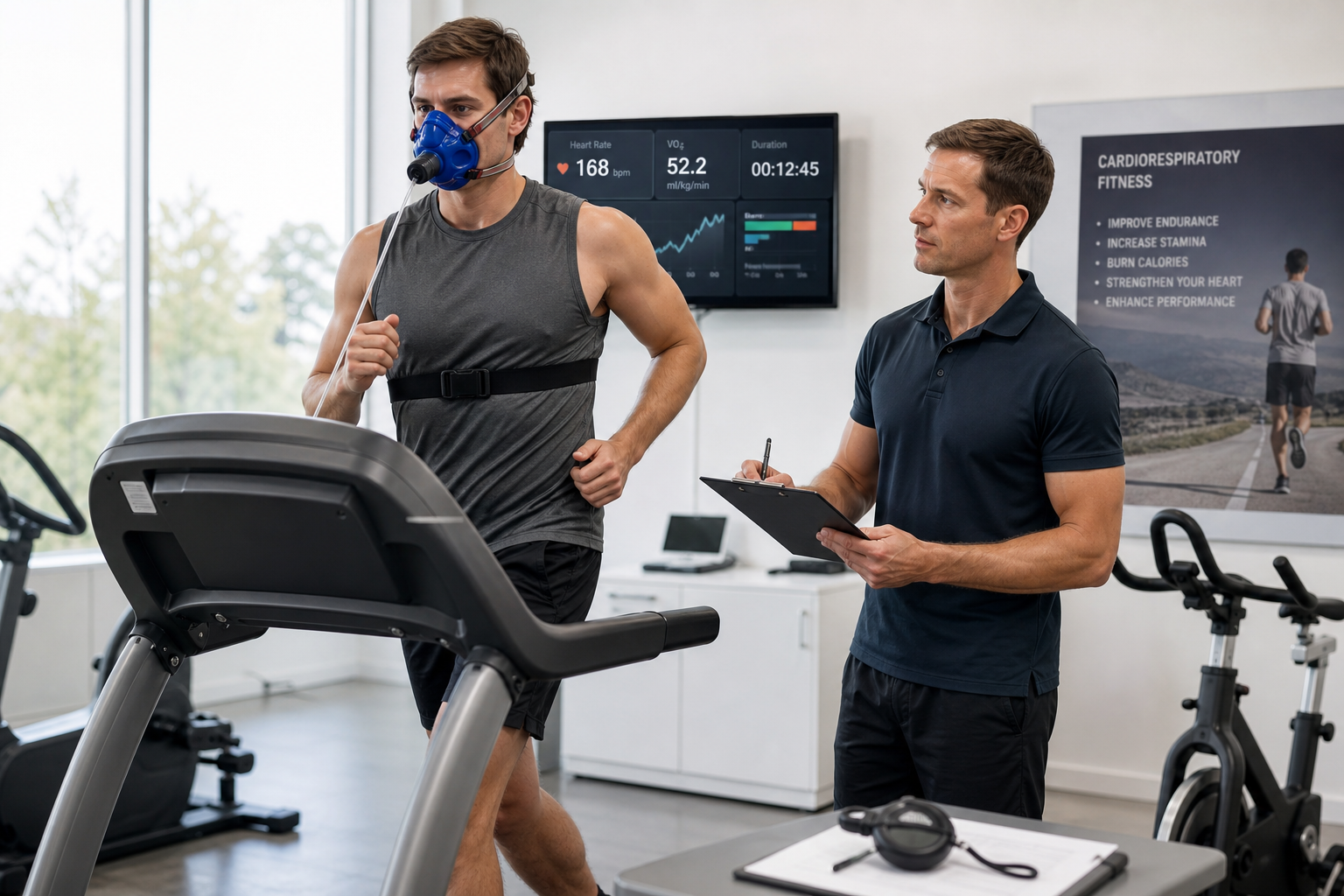
Aerobic exercise is activity that uses large muscle groups rhythmically and increases the body’s need for oxygen.
It is often called cardio.
Common examples include:
Aerobic exercise can be low, moderate, or vigorous intensity.
For stress management, moderate-intensity activity is often a practical place to start.
Clients should be able to breathe harder than normal but still speak in short sentences.
This intensity is challenging enough to create a training effect but manageable enough for most people to repeat consistently.
Physical activity can support mood and emotional well-being.
During and after exercise, the body may release chemicals that influence mood, stress response, and feelings of well-being. These include endorphins, dopamine, serotonin, and other signaling molecules involved in mood regulation.
This is one reason people who exercise regularly often describe feeling better after a workout or run.
Research continues to show a relationship between regular physical activity and improved mental health outcomes, including lower risk of depression and anxiety.
Exercise can support people who are having a stressful day, feeling mentally drained, or struggling to stay consistent with healthy routines.
That said, trainers should be careful with language.
Aerobic exercise can support mental health, but it should not be presented as a cure for anxiety, depression, trauma, or other mental health conditions.
Clients with significant mental health symptoms should be encouraged to work with licensed mental health professionals.
For fitness professionals, the role is to support healthy movement, consistency, accountability, and general well-being within scope of practice.
Whether a client is having a difficult week or simply wants to feel better, aerobic exercise can be a useful tool for improving mood and supporting mental well-being.
When stress feels overwhelming, it can often lead to brain fog.
Brain fog may feel like difficulty focusing, remembering details, making decisions, or thinking clearly.
Aerobic exercise can help support brain function in several ways.
It increases circulation, supports oxygen delivery, influences stress hormones, and may support neuroplasticity, which is the brain’s ability to adapt and form new connections.
Moderate aerobic exercise can support cognitive functions such as:
Regular exercise is also associated with healthy brain aging.
For clients who feel mentally stuck, a short aerobic session may help.
A 20- to 30-minute walk, jog, bike ride, or low-impact cardio workout may be enough to reset their energy and focus.
Use aerobic exercise as an outlet when work feels hard to complete.
A short run or brisk walk may help a client return to their day with a clearer mind.
Keep Reading: Benefits of Bodyweight Training: You Can Gain Muscle
Stress can show up in the body.
Some people experience muscle tension, headaches, low back discomfort, neck tightness, shallow breathing, fatigue, or poor sleep when stress is high.
For people with chronic pain or recurring discomfort, stress may make symptoms feel worse.
Aerobic exercise may help by supporting circulation, reducing sedentary time, improving sleep, supporting mood, and helping the body handle stress more effectively.
Exercise also supports many physical systems.
Regular aerobic activity can help improve:
For clients with chronic pain or medical conditions, trainers should stay within scope.
Exercise may help some clients manage symptoms, but it should not replace medical care, physical therapy, or treatment from a licensed healthcare provider.
If a client reports sharp pain, worsening symptoms, dizziness, chest pain, numbness, or unexplained discomfort, the trainer should refer out.
The benefits of aerobic exercise can still be meaningful.
The key is choosing the right type, intensity, and progression for the client.
A low-impact option such as walking, cycling, swimming, or water aerobics may be a better starting point for clients who are deconditioned, returning to activity, or managing joint discomfort.
Strong mental and emotional resilience can make it easier to adapt during high-stress circumstances.
Resilience does not mean stress disappears.
It means the body and mind may be better able to respond, recover, and keep moving forward.
Aerobic exercise may support resilience by helping people become more familiar with controlled physical stress.
During exercise, heart rate increases. Breathing increases. The body becomes more alert. The nervous system responds.
These sensations can feel similar to stress.
But in exercise, the stress is controlled, purposeful, and usually followed by recovery.
Over time, consistent aerobic exercise may help people tolerate these sensations better.
This may support improved emotional regulation and a stronger sense of control.
Exercise can also support resilience through routine.
When clients commit to regular movement, they practice showing up for themselves. They build confidence. They learn that they can do hard things. They may also sleep better, feel more energized, and manage daily stress more effectively.
This is why maintaining a consistent fitness routine is important.
The more clients prioritize movement, the more tools they have to manage stress as it arises.
Clients do not need to train like athletes to receive benefits.
The Physical Activity Guidelines for Americans recommend that adults get at least 150 to 300 minutes per week of moderate-intensity aerobic activity, or 75 to 150 minutes per week of vigorous-intensity aerobic activity.
Adults should also do muscle-strengthening activities involving all major muscle groups on two or more days per week.
But the most important message for many clients is this:
Some movement is better than none.
A client who is inactive may not be ready for 150 minutes per week right away.
That is okay.
Start small.
Examples include:
The goal is to build consistency.
Once consistency improves, duration and intensity can gradually increase.
Aerobic exercise for stress management should be practical and enjoyable.
Clients are more likely to continue when the activity fits their lifestyle.
Ask clients what they enjoy.
Some people love running. Others hate it.
A client who dislikes running may do better with walking, cycling, dancing, rowing, hiking, or swimming.
For stress management, more intense is not always better.
Some clients may need moderate movement that helps them decompress. Others may enjoy vigorous intervals.
The right intensity depends on the client’s fitness level, recovery, stress load, and goals.
The talk test is simple.
During moderate aerobic exercise, a client should be able to talk but not sing.
During vigorous exercise, speaking becomes harder.
This can help clients regulate intensity without needing advanced equipment.
Stress management improves when movement becomes part of the week.
Help clients schedule aerobic exercise like an appointment.
Exercise is a stressor.
Even healthy stress needs recovery.
Encourage clients to balance aerobic training with sleep, hydration, nutrition, mobility, and rest.
The benefits of regular aerobic exercise for managing stress cannot be overstated.
Encourage your clients to add more aerobic fitness to their current workout routine and make time for more aerobic exercise yourself.
The good news is you can help clients manage stress with aerobic exercise whether you train in a gym, online, outdoors, or in a hybrid format.
Do not overlook this critical element of fitness as a trainer and fitness enthusiast.
It is powerful to know that regular exercise affects more than physical health.
It can also support mood, resilience, confidence, sleep, and quality of life.
This is why helping others build healthy lifestyles can be such a rewarding career.
Fitness and wellness professionals have evolved to look at clients’ lives in a more holistic way, including the impact of exercise on stress.
A degree in exercise science can help students understand how exercise affects the body and mind.
Fitness coaches, wellness coaches, and others in this type of profession may work in roles that help people improve health, strength, energy, confidence, and daily function.
When you choose this type of career, you may have opportunities to:
As you can see, it can be exciting to learn more about this type of study.
Lionel University provides exercise science degree programs that can help students prepare for careers in the fitness and wellness industry.
Students can pursue an associate degree, bachelor’s degree, or master’s degree at Lionel University.
Depending on the program, students may also earn a personal training certification and other fitness certifications or specializations along the way.
This makes it possible to begin building career skills while continuing toward a degree.
Lionel University’s courses are online, allowing students to study from home and balance education with work, family, and life responsibilities.
At Lionel University, students learn how exercise science connects to real coaching situations.
Students study how the body moves, adapts, and responds to exercise. They also learn how exercise can support health, fitness, performance, recovery, and wellness.
As a professor of Exercise Science and Human Performance, I often remind students that exercise is not only about changing how the body looks.
It is also about changing how people feel, function, and live.
For example, a client may start walking because they want to lose weight. Over time, they may notice they sleep better, feel less stressed, think more clearly, and have more energy for family and work.
That is the power of exercise science.
Lionel University helps students build a strong science foundation and practical knowledge for fitness and wellness careers.
The goal is to help students understand the body and use that knowledge to help people move, feel, and live better.
View Degree and Certificate Programs:
Aerobic exercise is one of the most accessible tools for stress management.
It can support mood, brain function, resilience, sleep, energy, and physical health.
Clients do not need a perfect workout plan or a gym membership to begin.
They need a realistic movement habit they can repeat.
Walking, cycling, swimming, dancing, jogging, and low-impact cardio can all help.
For trainers and fitness professionals, aerobic exercise should be part of the larger conversation about health and wellness.
When you understand how exercise affects both the body and mind, you can support clients in a more complete way.
Call Lionel University today to learn more about exercise science programs and how they can support your fitness career goals.